Skip to content


ERASMUS in KRAKOW

Krakow, became my home for the past 5 months. I have to admit that experience was better than I was expecting before deciding for the institution of Universty of Fine arts Jana Matejki. 
When I came, international office organised integration meeting when I met other people from Erasmus and this is where the journey started. I really felt from that day that Krakow was decision I made which will bring me alot of new experiences and knowladge. When I entered to Faculty of Intermedia everyone was trying to come towards me to find the best and optimal solution for my semester. I’ve chosen three studios, which were audiosphere, drawing studio and conceptual art studio. It was especially refreshing for my study process to take part in Erasmus in general, because in the art field approaches can be very diverse. I was constantly trying to adapt but at a certain point I figured it out and managed to find some common ground on how I could work in a certain studio. 

I’ve had an idea on how I wanted to create one part of my diploma project here in Krakow, but at first it seemed quite hard, but then with time I simply noticed it is possible. Somehow I started using similar symbols in my projects which evolved differently but at the end my project was created in a conceptual art studio under mentors prof. dr. hab. Artur Tajber, dr. Krzysztof Maniak, doc candidate Adam Antoni Zduńczyk was finalised and exhibited in the final exhibition of the Intermedia department. The project is called 27 days of listening to Krakow. 

Description on 27 days of Listening to Krakow, Looking on the map of Krakow, one found it visually similar to an ear. Notion for 27 days of listening was born as an embryo which firstly feels the frequencies within body. While creating a regime on how to listen to Krakow, Gašper did make some guidelines which were changing but led him to find the final act. Act of 7 yoga poses in which one can listen to the city of Krakow.

Apart from my main studios I also took one extra class in the department of Scenography which was led by prof. Olga Ząbroń. My idea was to attend some basic scenography class to get closer with methods on how to build a space in theater since my area of studies are not directly connected but I have already experienced production design on film sets. However, I had a meeting with the professor and somehow we clicked, even though the subject was about spatial design. So I wasn’t in the class where I was supposed to be creating a scenography but instead we were discussing theater as a space. We went back to history, we tried to understand how the idea of the theater was born. My final project which I also exhibited at the final Eramus exhibition. I’ve created a mock up of Greek teatro, which was made out of 27 bricks. 

I have also taken part in the Polish class which enriched me with some basics of the Polish language. For native slovenian I believe this class was entertaining but also a bit confusing since languages can be so similar but so different. Classes were conducted with such a great energy, 

During my semester I’ve met people that showed me not just the city but also themselves, I was able to deeply reflect on myself as well. Probably it happened because I was way more sensitive to trying to present myself, talk about my background but at the same time I had to listen to others, make plans together and find some common language which could suit all of us. I’m able to say that I have met people with whom I will stay in contact after my Eramus. It is really meaningful and I do feel emotional when I’m thinking of returning back to Slovenia. Apart from people from Eramus, I found the city of Krakow full of hidden places that fulfilled my soul. I think it’s really clear that the city was important for me since I did the project dedicated to listing the city. I would recommend anyone who is thinking to choose Krakow to go, if one is not a fan of winter than summer semester is a way nicer option. I got to see also other parts of Poland which are truly fascinating aswell, I would point out city of Gdansk which became my second favorite city in Poland, maybe because of the baltic sea. 

I’m looking forward to meeting my friends around Europe or simply to travel back to Krakow and meet some of them there again. 

Thank you Krakow and see you soon..

Gašper Rebernik
Posted in Outgoing students.


Erasmus+ short term mobility in Banja Luka

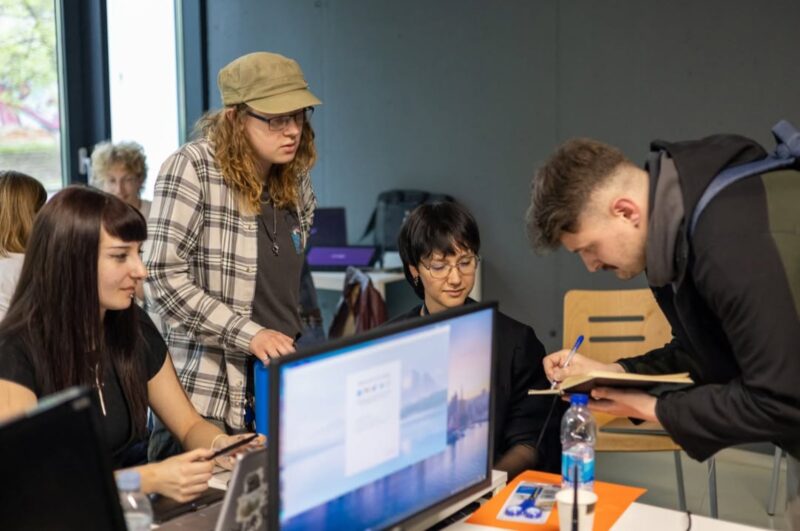
From 19th to 23rd of April we participated in Animacikl – a animation workshop in Banja Luka as part of a festival in which we had 48 hours to make a 1 minute animated short. Students from all over Europe got mixed into groups with other foreign students and in the 48 hours had to get to know each other, get familiar with each other’s skills, and think of and make a film based on the workshop’s theme.

The main rule of the workshop was that at least one person from the group needs to be on the premises working at all times, so we had to arrange shifts and separate the work well. However, the students weren’t the only ones awake as the organisers and representatives of the hosting school were providing us with food, drinks and snacks, and checking up on us no matter the hours. We were also located on a campus, so there was a cafe nearby and places to rest and hang out in between work.

The time before and after the workshop we spent exploring around the city and the campus. Upon arrival there was a collective lunch, and in the evening an organized gathering where we got the chance to mingle and talk to other students in a fun and pleasant atmosphere. We enjoyed discussing experiences because, in reality, not all students had worked in animation before, but actually came from other backgrounds (new media, contemporary arts, etc).

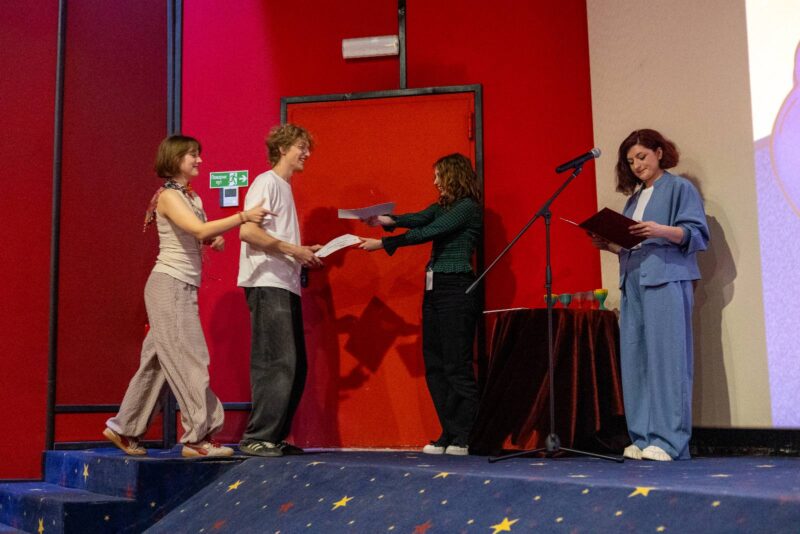
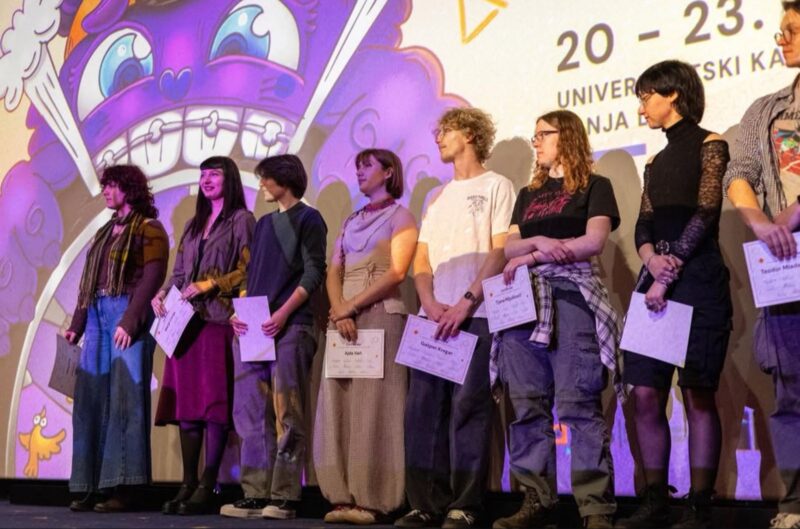
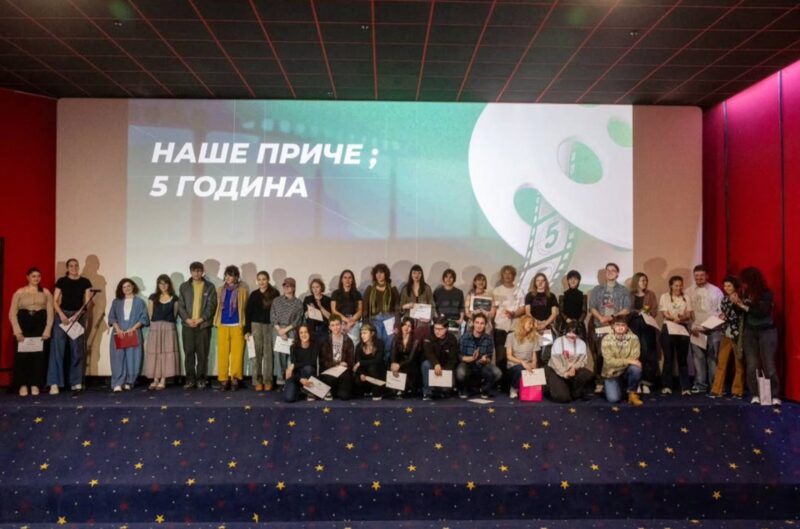
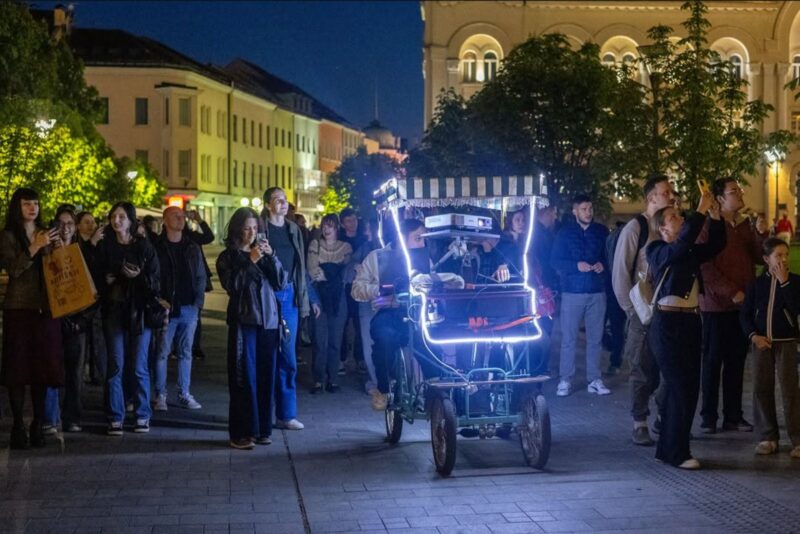
At the closing ceremony we received certificates for participation. Afterwards we walked around the city behind two student representatives of the Bosnian school who were biking with a projector and a DJ booth, playing music and projecting animations onto buildings around Banja Luka, for the public to see as well.

This intense experience, in some ways, also made us closer to our teammates enough to keep in contact even now, and our colleagues from Croatia are even planning a visit to Ljubljana soon 🙂

It was definitely one of the more interesting and most challenging experiences we got an opportunity to participate in. We had to combine our advantages and make up for each other’s disadvantages in the most efficient way in order to finish by the deadline. Brainstorming and arriving on the same page with complete strangers was a semi-stressful new obstacle, but a very useful experience as it forced us to confront our communication, problem solving and cooperation skills.

Overall, as a person who likes to test my own limits and push myself to improve as much as possible also in the field of animation, I think this was a very useful and unforgettable experience that I would encourage anyone to try at least once, even if not in the field of animated film 🙂

Posted in Others.


Traineeship in Cinque Terre, Italy

We were accommodated in La Spezia, which proved to be an excellent base for all the activities we carried out in the Cinque Terre. The location allowed easy access to the fieldwork sites while also offering a pleasant environment to relax and explore. Our main activities focused on understanding the challenges that the rugged terrain of the Cinque Terre presents to local vineyard owners. Already on the first day, we had the opportunity to observe how the lack of proper road access is addressed, particularly through the use of helicopters to transport stone for building terraces, which we found especially interesting to witness firsthand.

We also learned how local producers overcome these obstacles through the construction of terraces and the implementation of vineyard management techniques specifically adapted to steep slopes. In addition, we were introduced to the region’s rich biodiversity and distinctive wine styles, gaining both practical and theoretical knowledge.
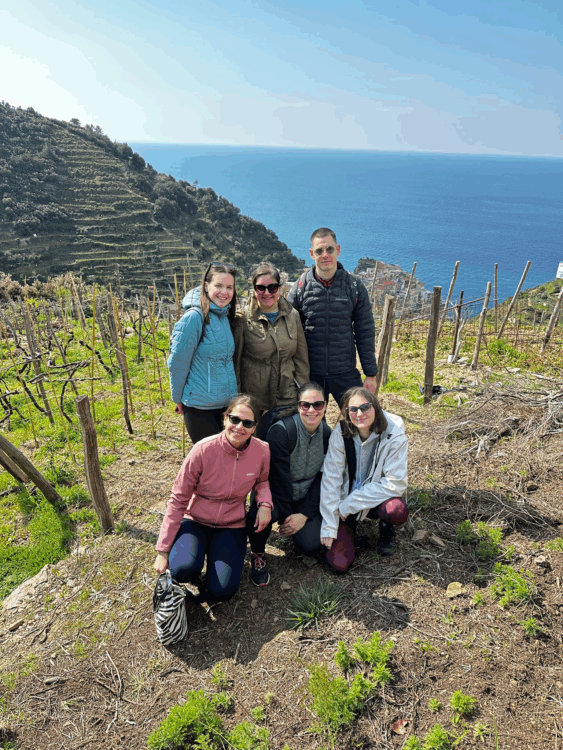
Beyond the academic and professional aspects, the experience was enriched by long walks through the stunning landscapes of Cinque Terre. Although these hikes were often physically demanding, the breathtaking views made every step worthwhile. Just as important were the moments of constant social interaction—talking, laughing, and bonding—which made the entire experience even more memorable.

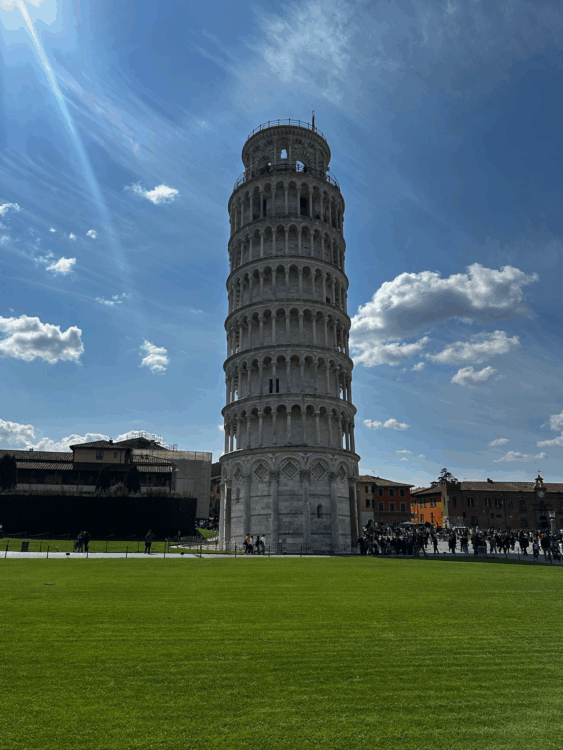
We also had some free time, which we used to explore all five villages of Cinque Terre, as well as La Spezia and nearby cities such as Florence and Pisa. These visits allowed us to further immerse ourselves in Italian culture, history, and everyday life, while also practicing the Italian language.

In addition to the valuable practical knowledge and expanded professional network we gained, this experience was significant for cultural exchange and personal growth. Although it was a relatively short-term mobility, it was rich and fulfilling in every sense.

About Cinque Terre you can read more at following site: https://www.parconazionale5terre.it

Greetings from Valentina, Anusa, Magdalina, Tara, Ivan and Sofija

Posted in Others.


Academic Experience at Hochschule Geisenheim University

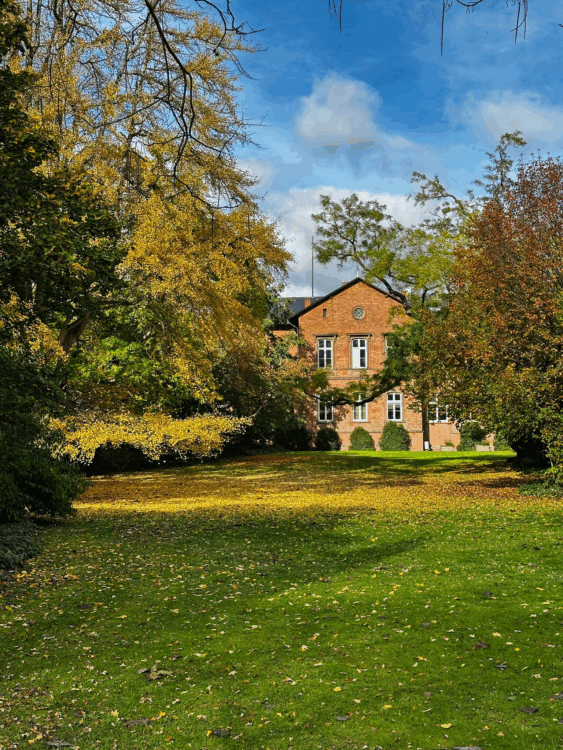
During the winter semester 2025/2026, my colleague, Ivan Bosic, and I participated in the Erasmus exchange program in Germany at Hochschule Geisenheim University. Our interest in this institution developed after our short-term exchange in Udine, Italy, where we first learned about the research projects conducted in Geisenheim. The innovative work and strong focus on viticulture and enology motivated us to apply.

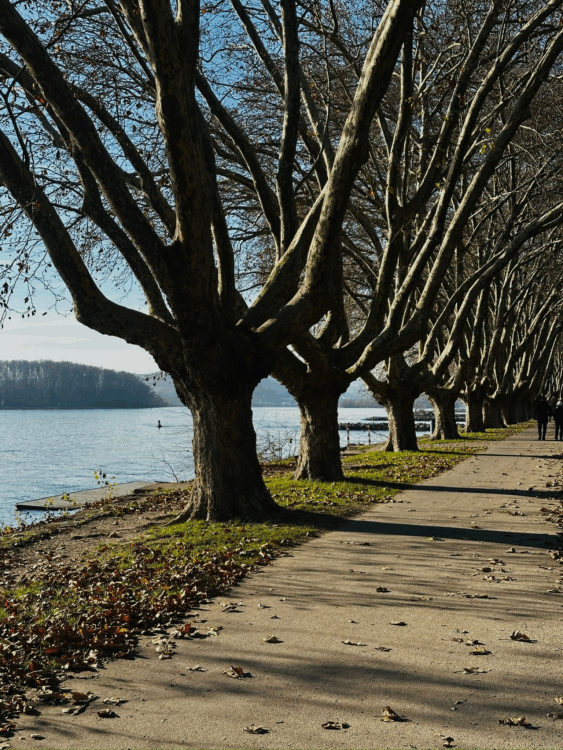
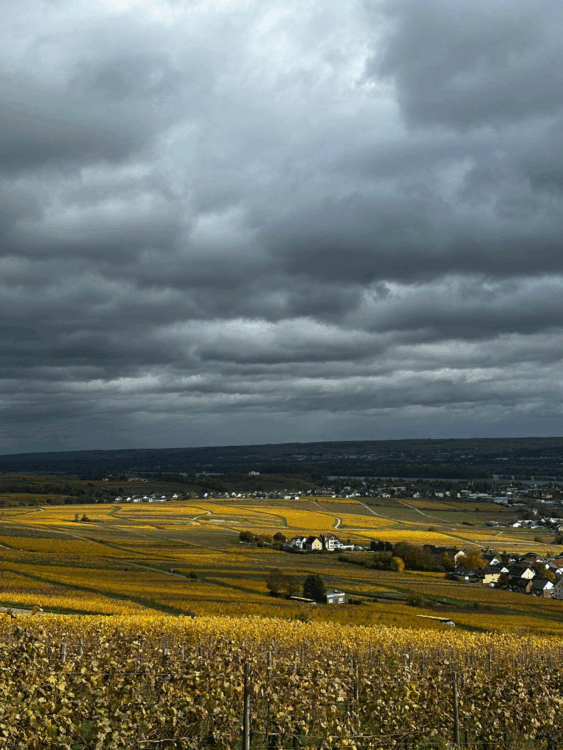
Geisenheim is a small town located on the banks of the Rhine River in the famous Rheingau wine region. The area is particularly well known for its production of Riesling and Pinot Noir, two grape varieties that play a central role in the region’s winemaking tradition. Surrounded by vineyards and numerous wineries, the town has a strong connection to viticulture and wine culture. Along the river, there are pleasant walking paths and promenades that offer a relaxing atmosphere and beautiful views of the Rhine and the surrounding vineyards, making Geisenheim a charming and characteristic wine town.

Academically, the semester was highly enriching. The professors were approachable and supportive, openly sharing their projects and extensive knowledge. Their guidance inspired us to reflect on our own professional interests and helped us better define the directions we wish to pursue, as well as those we may choose to avoid in the future.

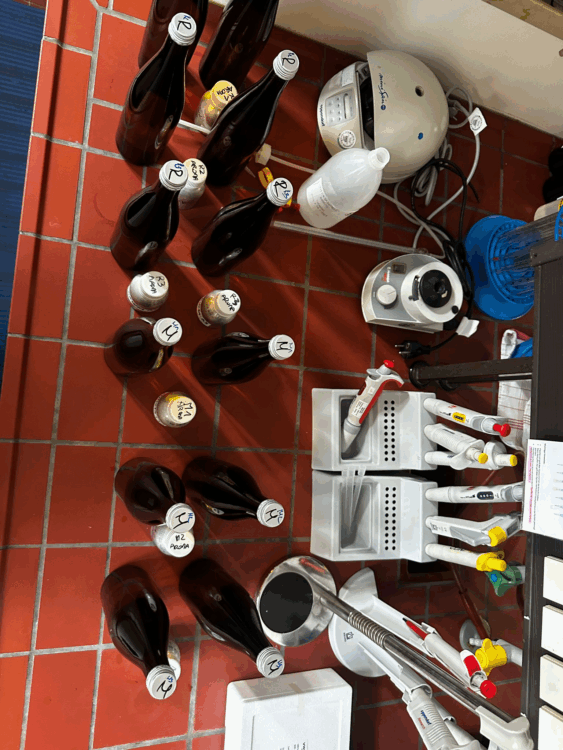
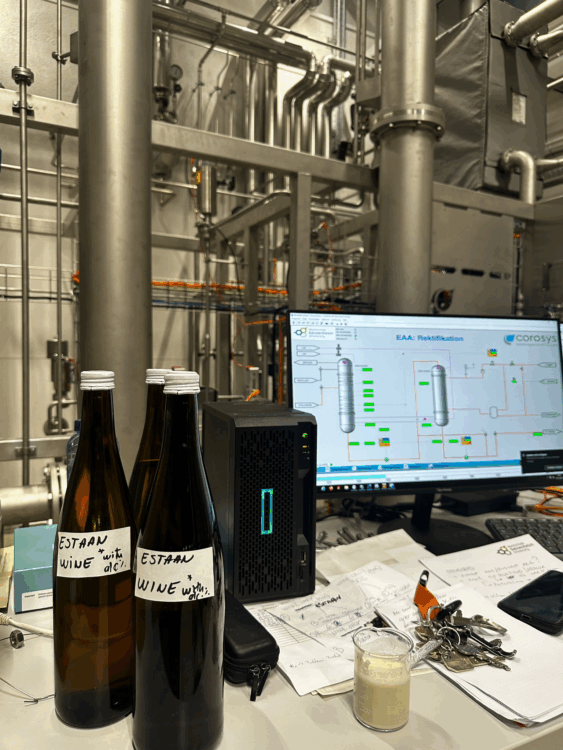
Throughout the semester, we were actively involved in research projects and laboratory work. We performed various laboratory analyses and became familiar with modern equipment, including vacuum distillation systems and other advanced technologies used in contemporary enology. In the breeding department, we practiced grafting and learned about grapevine improvement strategies. We also participated in vineyard walks, where we discussed the challenges of modern viticulture, such as climate change adaptation and sustainability.

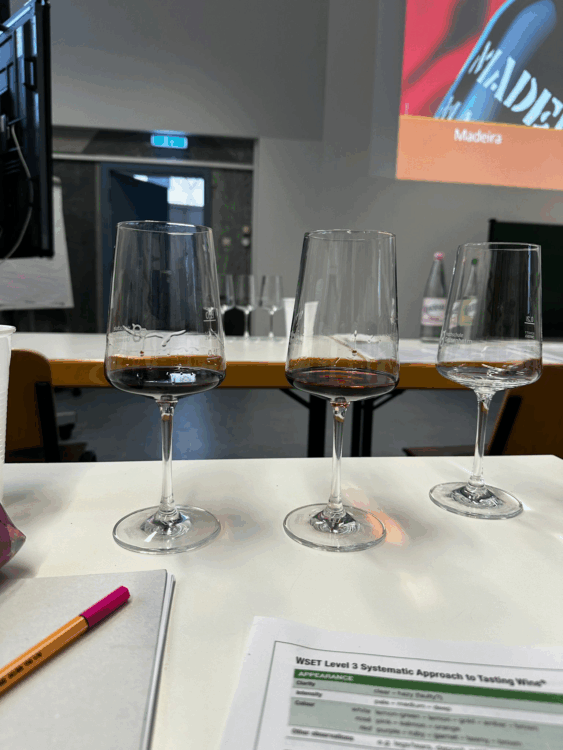
Additionally, we expanded our knowledge of global wines through training sessions for WSET Level 3, gaining deeper insight into wine styles, evaluation techniques, and international wine markets. These experiences were highly valuable for our field of study and future careers in viticulture and winemaking.

Our class group was very diverse, consisting of students from countries such as Argentina, Mexico, China, Brazil, Italy, and others. This diversity created a stimulating academic environment in which we constantly exchanged ideas, career plans, and perspectives. Beyond academic discussions, we gained insight into different cultures, social systems, and global events through everyday conversations. These interactions broadened our worldview and enhanced our intercultural understanding. We also improved our language skills, practicing English daily and further developing our Italian, which we are currently learning. Participating in team projects strengthened our communication and collaboration skills, teaching us how to work effectively with people from different backgrounds and academic traditions. At the same time, informal gatherings, coffee breaks, and discussions with assistants created a friendly and motivating atmosphere. These moments balanced the academic intensity and contributed to building meaningful connections.

Erasmus is not only an academic exchange but also a cultural one. Our stay in Germany allowed us to experience the country beyond the classroom and laboratory. We explored several German cities, learning about the culture, history, and organization of society. By immersing ourselves in a different educational and social system, we were exposed to new habits, structures, and ways of thinking. This experience pushed us out of our comfort zone and significantly contributed to our academic, personal, and mental growth.

Overall, our Erasmus experience was transformative. It enriched our academic knowledge, expanded our cultural awareness, strengthened our teamwork skills, and contributed to our personal growth. The semester in Geisenheim was not only an educational opportunity but also an important milestone in our development as future professionals in viticulture and enology.

Posted in Others.


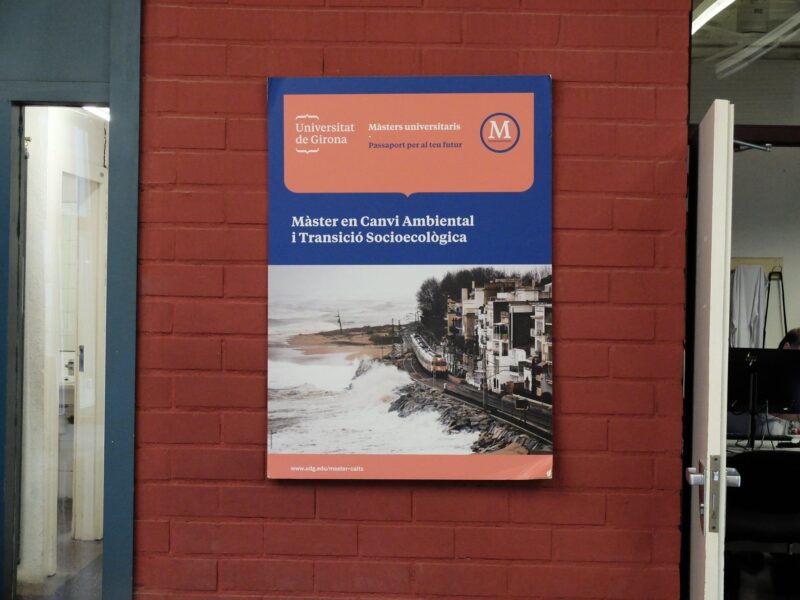
Erasmus+ exchange at University of Girona (Màster en Canvi Ambiental i Transició Socioecològica) – Nicoleta and Jakob

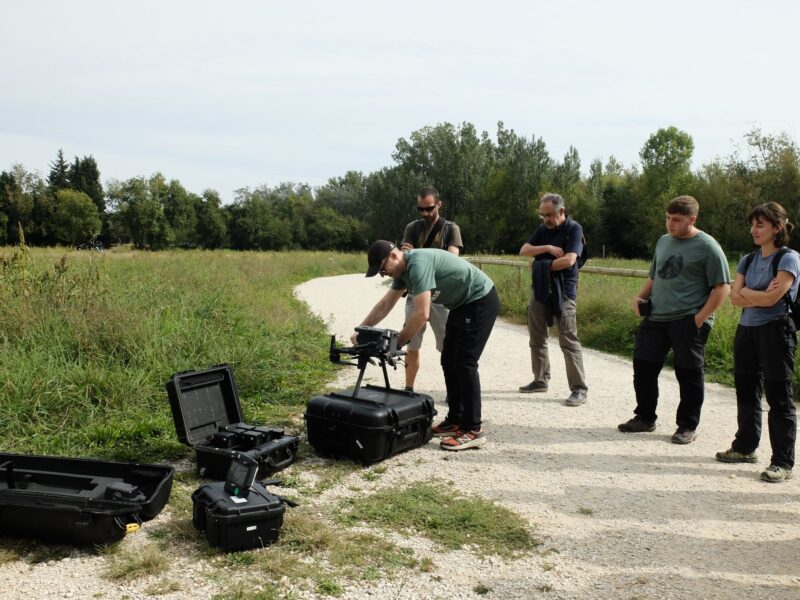
The program felt amazing to both of us, and we still cannot believe such a program and such involvement of the professors is possible. What is really outstanding is that the program successfully binds together technical knowledge with building thinking capacity and introducing the politics, governance and importance of the social aspect in addressing the climate change and nature protection. The mix of the given subjects are refreshing and a delight to participate in! It is also important that there is a lot of themes that are up to date. Topics like nature contribution to people, degrowth, rewilding which are “new” in academia were here present all the time – this gives a sense of the program keeping up to date with the new things and ideas. We are also extremely grateful for the professors being so attentive and caring. We for the first time in our academia life felt truly supported and encouraged. Professors are approachable and it seems they really take their time to provide important knowledge. Most importantly, there is no presumptions and diminution of students as “someone less”. We loved the applicability of knowledge immediately in the classroom – solving different problem questions and opening discussions. This is something worth maintaining. Field trips (we feel there could be a few more) are another great experience of the program, and they give the needed perception and reality checks.

The study for one semester was very intense for us and wishing to keep up with everything, we felt oversaturated and unable to absorb all the knowledge, especially since it was in Catalan which we were having trouble understanding.

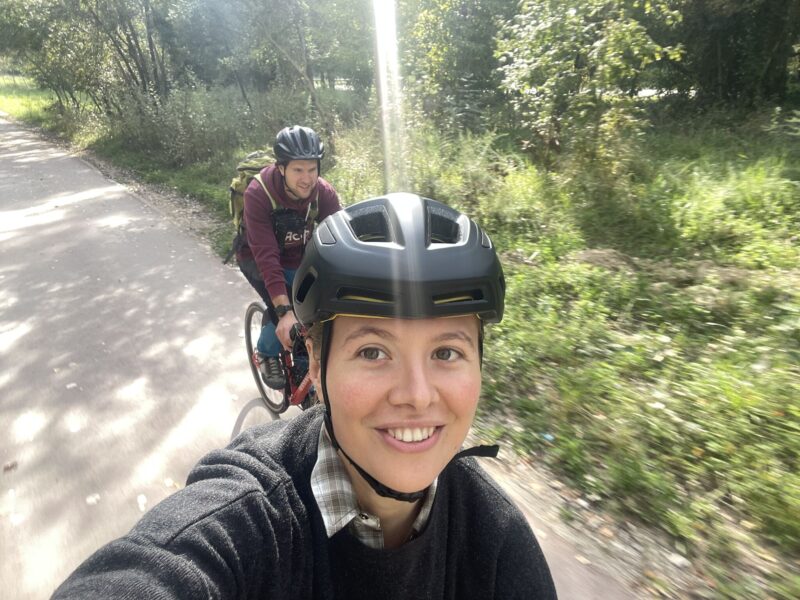
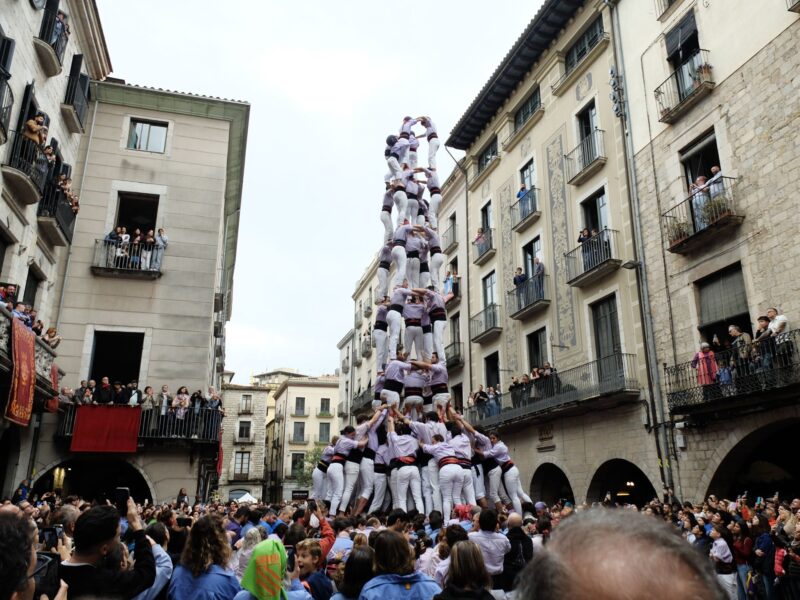
We are glad we chose Girona over some bigger cities, since everything was accessible by bike and it still offers everything that you need for life. Housing can be hard to find and quite expensive (expect to pay around 300-400€ for a room in a shared flat). The city is very well connected with regional and international railways; it is situated between the sea and the Pyrenees.

At the end, thank you ALL again for this experience. The program in our opinion is a shining example in Europe and a rare find! The application proces was a not so demanding, especially because of all the help we received from Jana Beguš and Núria Roura-Pascual.

More info: https://www.udg.edu/ca/masters-en-mediambient-i-quimica/caits/informacio-general

Greetings, Nicoleta and Jakob 

Posted in Others.