Skip to content


Erasmus_Ars Electronica 2025

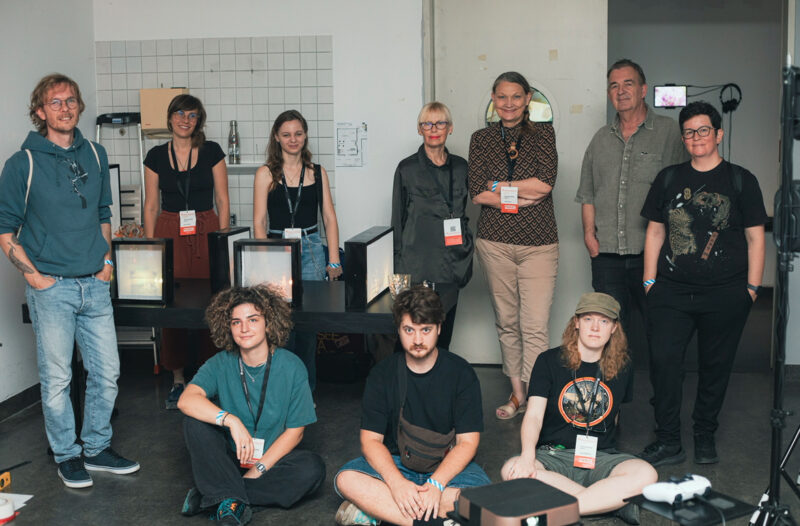
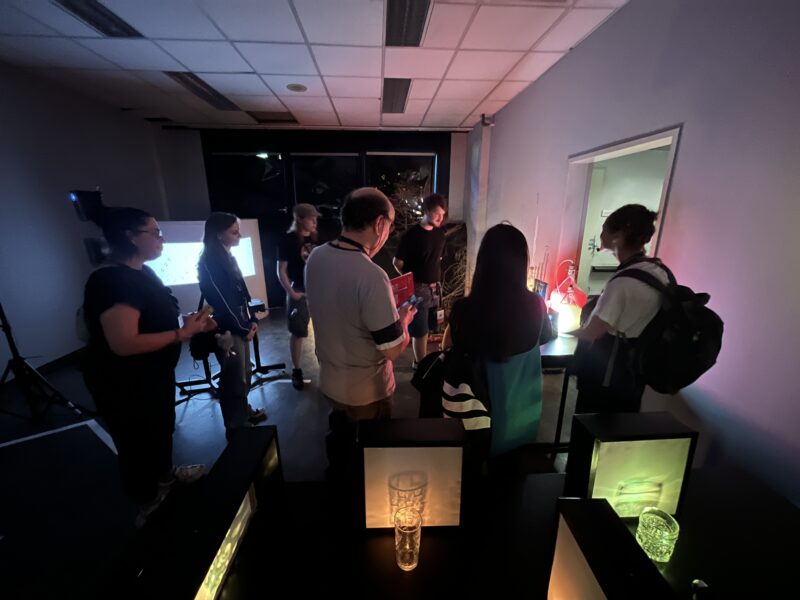
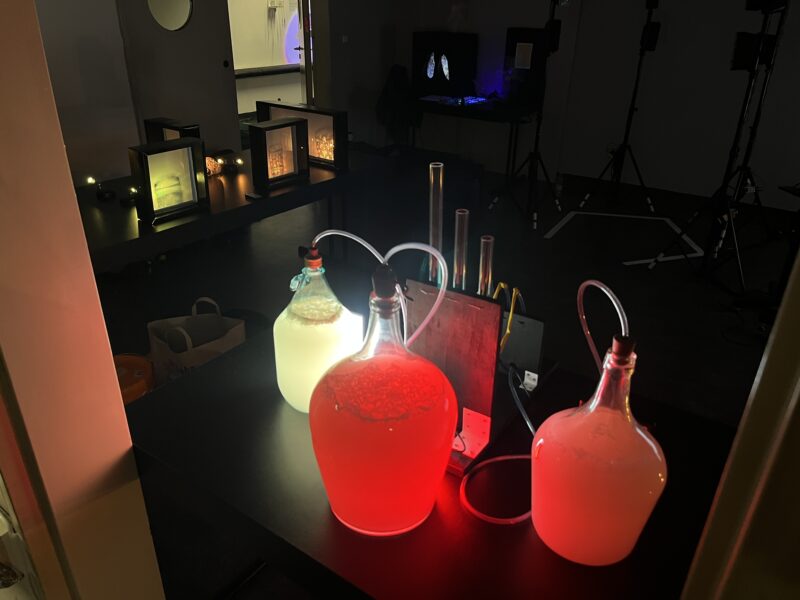
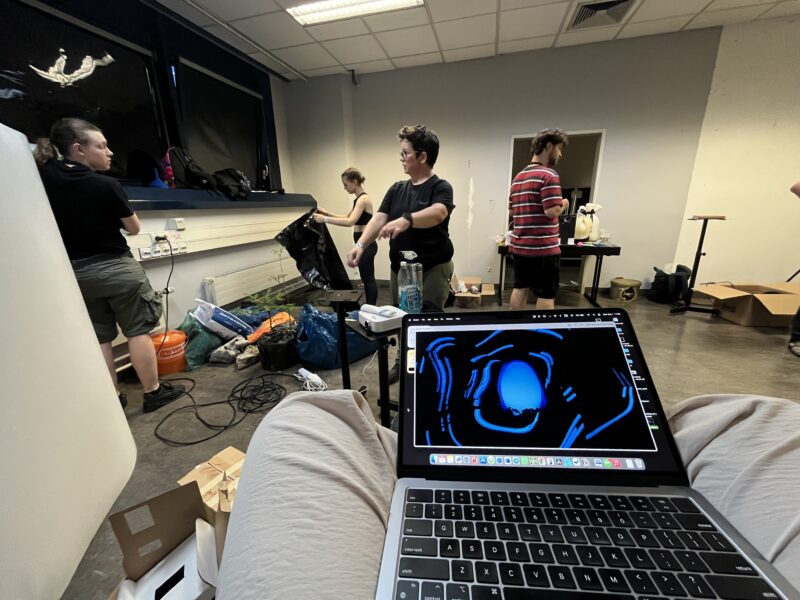
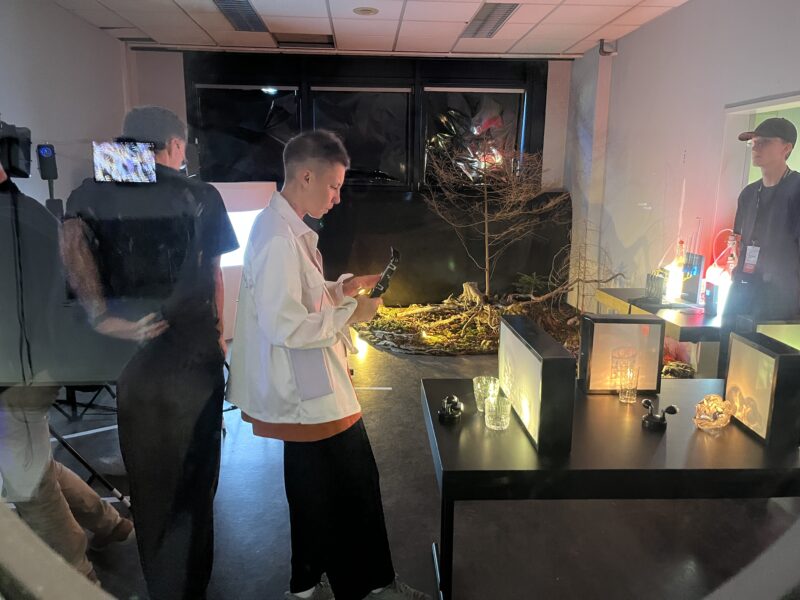
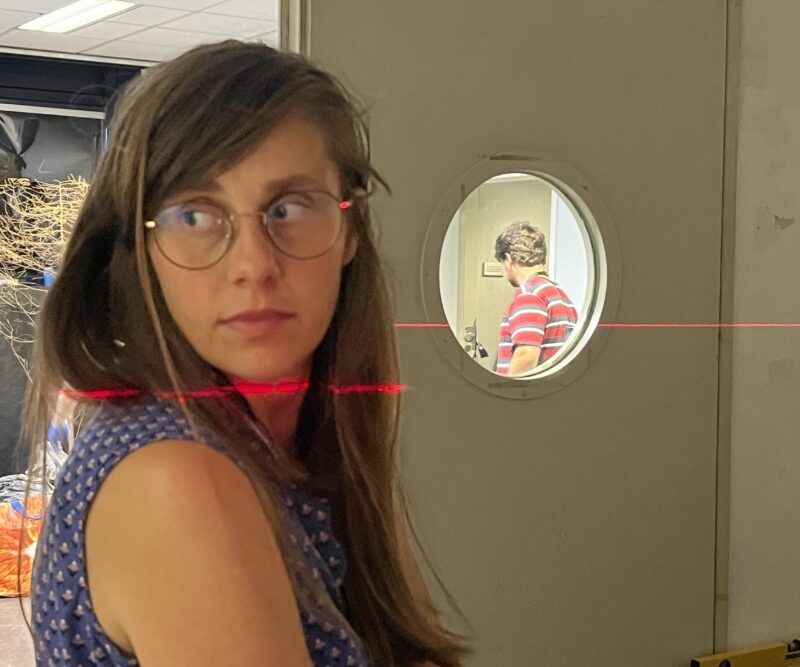
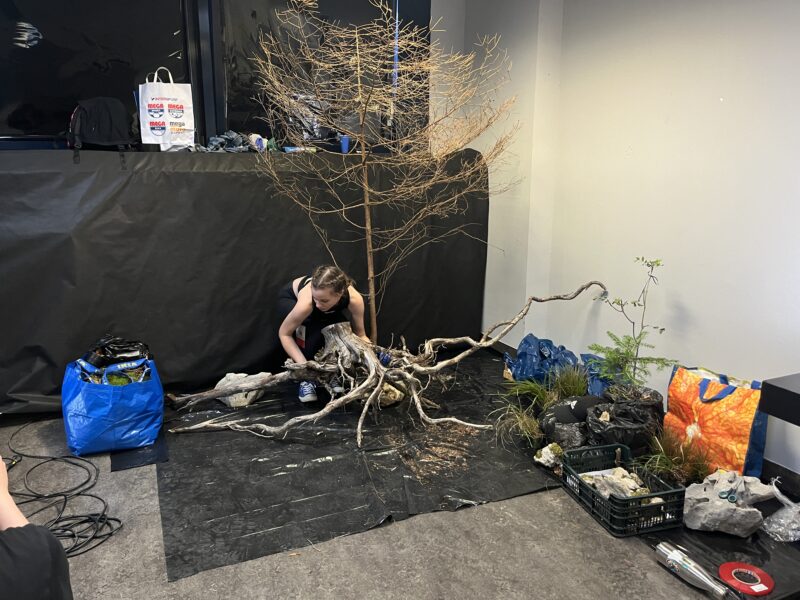
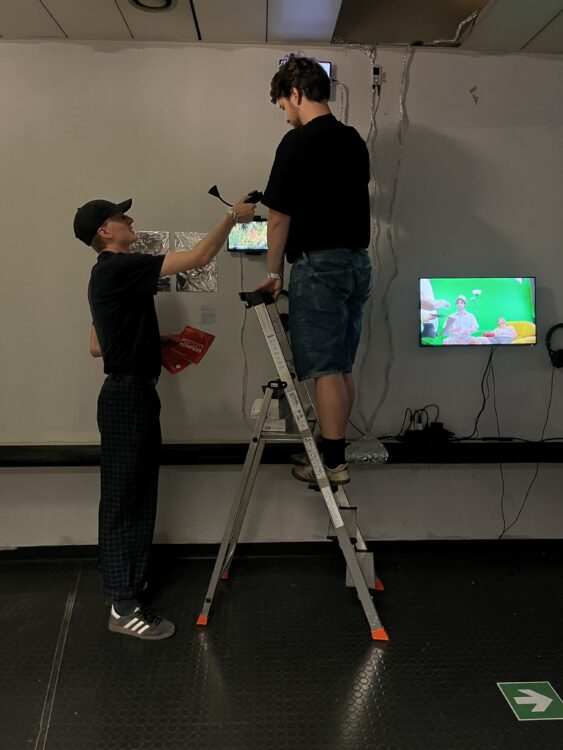
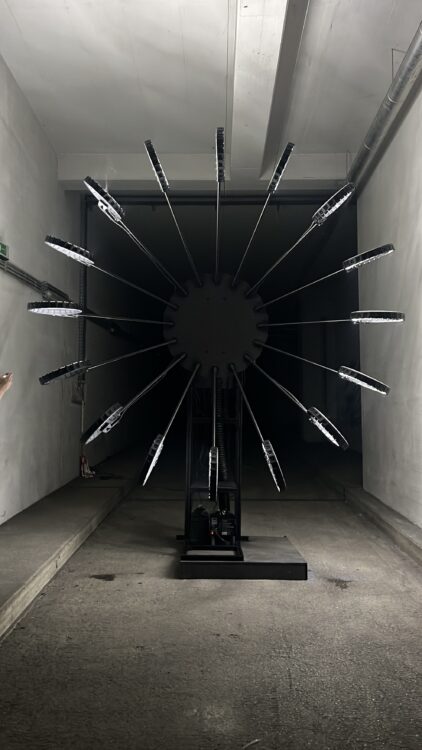
We spent about a week in Linz for Ars Electronica, and it turned out to be an intense but really rewarding experience. The festival was packed with works that connected science, art, and technology in ways that were sometimes playful, sometimes serious, but always thought-provoking.

Walking through the exhibitions, we kept running into projects that pushed us to think differently about everyday things — from how technology changes human behavior to how art can open new perspectives on research. There was a lot to take in, and at times it felt overwhelming, but in a good way. The variety of works made it impossible to see everything, yet that was part of the charm: you never knew what was waiting around the next corner.

What stood out just as much as the artworks were the conversations we had throughout the week. We met so many people — artists, curators, scientists, students — and each exchange added a new layer to the experience. Sometimes it was a short chat over coffee, sometimes a long discussion after a panel, but in all cases it felt like we were part of a community that is genuinely curious and open. Those connections already feel like seeds for future collaborations, or at the very least, friendships that will continue beyond the festival.

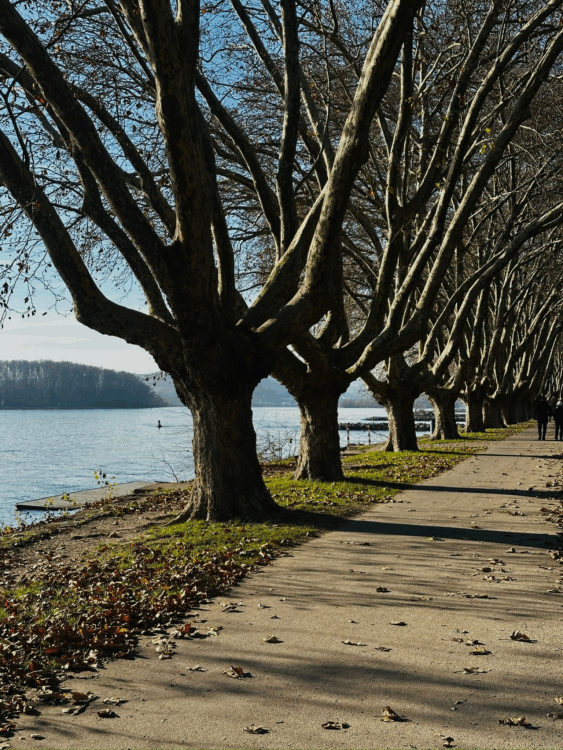
Linz itself added to the atmosphere. The festival spread across different locations, and moving between them gave us small breaks to take in the city. Sitting by the river in the evening, after a full day of installations and talks, became its own ritual — a way to process everything we had seen and heard.

By the end of the week, we were both tired and energized. Ars Electronica left us with new impressions, a lot of inspiration, and a sense that the conversations we started there will continue long after the festival. It’s rare to find a place where science, art, and technology come together so naturally, and we came back with both ideas and people we know will shape our work in the future.

Posted in Others.


Erasmus study exchange – Lisbon 2025

My name is Katarina, I am a student of Environmental Sciences at University of Nova Gorica, and I spent the second semester of my third year of undergraduate studies in Lisbon, Portugal, as a part of Erasmus mobility programme.

I chose to attend Instituto Superior de Agronomia (ISA), a school which is a part of Universidade de Lisboa, because they offered the course Environmental Engineering, a closest match to my course of Environmental Sciences that I could find. Unfortunately, most of the undergraduate courses are in Portuguese, so I couldn’t follow along in classes, but professors did provide me with all study materials in English and were open to helping me in whatever way necessary. I did email each professor individually before even singing my OLA to ask whether I could attend their classes and if I could do the exam in English and they were all welcoming. When it comes to the content of study, since it is Faculty of Agronomy, a lot of the subjects and projects are taught from the perspective of agronomy which was interesting because it provides a different viewpoint on issues than the one you would’ve gained at UNG.

When it comes to Lisbon itself, it’s truly a gorgeous city, and so multifaceted that everyone can find something up their alley. From bars, hangout spots, and worldwide cuisines, I found it exciting to explore not just the differences and gems of Portuguese culture but also food and cultures from Middle and Far East, South America and Africa. Lisbon has become an insanely multicultural city and there are many opportunities to be exposed to a variety of cultures, what with the restaurants and festivals promoting specific countries or regions of the world. Additionally, many festivals and concerts are organised in Lisbon, especially during the summer, and a lot of them are free. This is a link which I used to find a lot of different events: https://egeac.pt/ but also pay attention to posters on the streets because they led me to some of the most interesting parties or experiences. Also, don’t sleep on Portuguese museums – Lisbon offers free admission to a wide variety of museums with just their tax number (NIF) and it is a cool way to experience Portuguese culture.

Portugal is a gorgeous country with truly mesmerising nature. If you have the opportunity, it’s a wonderful experience to travel wherever in the country. The top destinations are the south or Azores and Madeira. The islands are insane – their nature is unlike anything which can be experienced in the rest of Europe and the flights from Portugal can are cheap. Of course, it’s not necessary to spend money in order to sightsee Portuguese nature – the city transport card covers a giant area around Lisbon, and you can make wonderful daytrips around the area, one day visiting the mountain hiking trails while already the next you’re walking on cliffs overlooking the Atlantic Ocean. And really, five months is not enough to see all the different places you can just in the Metropolitan area of Lisbon.

Erasmus exchange is really a good opportunity, no matter whether you want to live abroad for the rest of your life or not. Sure, it does come with challenges – such as paperwork, language barriers, cultural differences – but knowing that you’re going to spend a limited amount of time in a place really makes you appreciate it differently and encourages you to take advantage of every second of every day.

Posted in Others.


Erasmus Mobility – Girona 2025

Earlier this year, a group of us had the wonderful opportunity to spend five unforgettable days in Girona, Spain, as part of an Erasmus+ exchange. We participated in two parallel courses: Videography and Joyful and Sustainable Future Technologies, each offering its own unique perspective and experience.

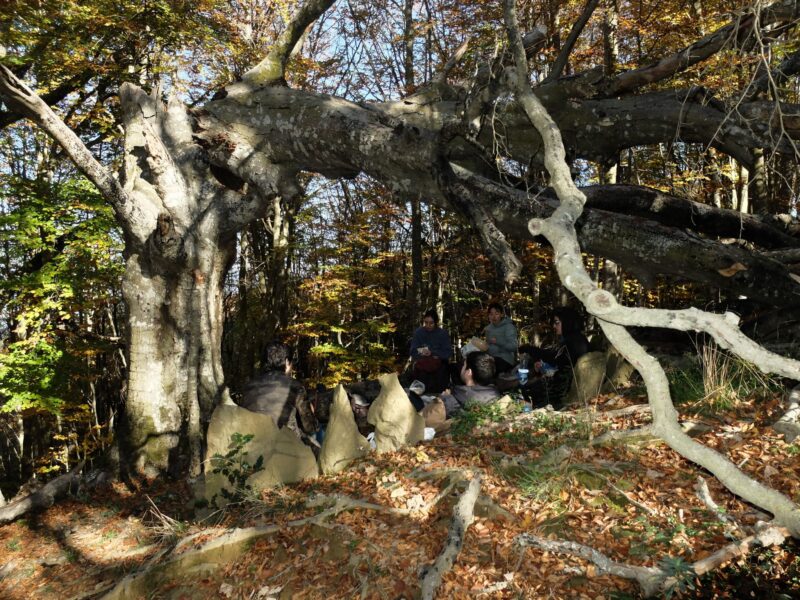
The Joyful and Sustainable group spent three days immersed in nature, hiking through the mountains and completely unplugging from the digital world, quite literally, as there was no phone signal. Instead of scrolling through screens, we found ourselves reconnecting with one another through long conversations, shared meals, and even a few competitive rounds of board games. It was a refreshing reset, both physically and mentally, and a beautiful reminder of how grounding nature can be. Being surrounded by the forest, walking together, and reflecting on sustainability helped many of us slow down and reimagine the future through a more joyful, connected lens.

Meanwhile, our peers in the Videography course were exploring the city of Girona through a filmmaker’s eye. They created short films inspired by the textures, colors, and rhythms of the city, each one capturing a different perspective. Whether it was through observational storytelling, experimental visuals, or interviews, every piece reflected not just Girona’s charm, but also our evolving view of Spain itself,  a perspective deepened by a day trip to Barcelona, where the vibrant energy of the city offered a striking contrast and complement to Girona’s quiet beauty.

Beyond the structured activities, there was plenty of time for play, exploration, and connection. We laughed a lot, danced a little, got lost and found again, shared stories in multiple languages, and learned from one another in the most unexpected ways. It wasn’t just about learning new skills,  it was about being open, curious, and present.

We came back with hearts full of impressions, eyes full of color, and notebooks (and SD cards!) full of ideas. And most importantly, we brought back new friendships and a fresh sense of what it means to live and learn together.

Posted in Others.


Erasmus Internship at the National Archives of Malta

My name is Emilija Vučićević, and I am a student of the MA program in Humanities Studies (Literary Science) at the School of Humanities, University of Nova Gorica. Although an internship is not a mandatory part of my curriculum, I decided to spend the final semester of my studies in Malta, doing an internship at the National Archives.

In this post, I will briefly present my internship experience.

Life in Malta

Before coming for the internship, I had visited Malta only once – when I came to see a friend who studies there. Malta is a small island in the middle of the Mediterranean, south of Sicily and close to Africa. In terms of architecture and culture – along with the Maltese language – it truly represents a blend of these two continents, with additional layers left behind by various colonizers throughout history. Beyond all that, Malta is a well-known tourist destination, and because of its small size and the large number of people moving through the island, it often feels overcrowded. The number of people and cars on the streets was a big change compared to the calmness of Nova Gorica.

However, what you won’t find in Malta’s tourist brochures – but what I experienced many times during my five-month stay – are fireworks and religious processions. Malta has the highest number of churches per square meter in the world, and almost every church organizes a procession for its patron saint: a festive street celebration with relics and saintly statues carried out of the church. These processions are well attended and usually end with a large amount of fireworks at night. Malta was also one of the most heavily bombed countries during World War II. That tragic recent history has been transformed – nowadays, leftover bomb materials and gunpowder are used to make fireworks, and they take it very seriously. During my stay, I even attended a fireworks choreography competition. These were things I couldn’t have imagined before arriving.

Also, I had assumed that – since English is one of the official languages – everyone would speak it fluently and use it with each other. However, Maltese is very much alive in everyday use, and English is spoken mostly when necessary, with foreigners and tourists. That actually made me happy – Maltese is a beautiful, very difficult language, completely different from anything I’ve ever heard.

Working at the Archives

My internship took place at the National Archives. The National Archives of Malta is not housed in a single building – different departments are located in different cities: Valletta, Rabat, Mdina, and Gozo. This is partly due to the lack of space that would allow proper storage conditions for all materials in one place. I mostly worked in the central archives, located in Rabat. This department is actually housed in one of the oldest hospitals in Europe – Santo Spirito Hospital – which is mentioned in documents dating back to the 13th century. The old hospital has been slightly adapted for archival work, although the original architecture and layout of the rooms have remained mostly unchanged. Because of that, I would often see groups of tourists standing in front of my workplace during my lunch break, which reminded me to stop and appreciate the extraordinary setting I was working in.

My tasks varied by day: on Mondays, I usually worked on cataloguing passports and visa/residency applications from the 1950s, as well as scanning and digitizing materials ordered by people in the reading room. On Tuesdays, I digitized films and photographs from the archives of Malta’s biggest daily newspaper, The Times of Malta. Wednesdays were for working with other interns, usually in the storage rooms, organizing materials, arranging boxes, cleaning documents of dust, and replacing metal staples with archival-safe materials. From Thursday onward, it was back to cataloguing and digitizing.

This way, I got to experience different departments and meet most of the staff. Almost everyone was from Malta, except for a few people in the conservation department. I learned a lot about the Maltese temperament – my colleagues were warm, sociable, very open to communication and the world around them, spoke loudly, and ate food quite similar to what we eat in the Balkans: meat, bread, sweets coffee. I never felt excluded, even when I didn’t understand the language being spoken.

I’m sure I’ll return to the archives next time I’m in Malta – hopefully to volunteer and help, because there’s always more material to process, and also to visit all the new friends I’ve made!

***

My internship in Malta gave me an amazing experience in getting to know a place and a culture in a way I couldn’t have imagined. I didn’t know much about Malta before arriving, but after five months of living there, I feel a close connection to it. I’m glad I now know so much about this small country on the edge of Europe – one of the smallest in the world, with a long history of fighting for its own authentic place.

I’m also glad that I got to see the other side of a popular tourist destination, both its strengths and flaws – from its warm and kind people, to crowded public transport, a lack of sidewalks, and intense heat.

On the practical side, the internship equipped me with valuable skills for working with unpublished documents. I learned how to approach documents both physically and technically: how to catalogue, scan, preserve, and make them accessible in different contexts. I’m certain that this work will benefit my studies and future career – especially in research related to samizdat materials I’ve worked on so far, or in working with the Letters collection currently being developed at the Research Centre for Humanities at my faculty.

In that sense, the entire experience was extremely positive, and I would recommend working in the Archives and spending time in Malta to my fellow humanities students!

Posted in Others.


Erasmus+ exchange in Estonia

My name is Neda, and I am a student of animation at the School of Arts in Nova Gorica. Before finishing my bachelor’s, I took an absolvent year and decided to spend the spring semester at the Estonian Academy of Arts, EKA (Eesti Kunstiakadeemia). In this text, I will separate a few chapters about life in the country, as well as what the semester looks like as an animation student at the academy.

walking on the frozen sea

Estonia is a small country located right across from Finland, over the Baltic Sea, sharing a border with Russia and Latvia. Due to its position, the weather conditions differ dramatically compared to countries in the west and south of Europe. Winters have very short daylight hours (sunrise is around 9:00 and sunset around 15:00), while summers are the opposite (sunset around 23:00 and sunrise around 3:00). Keeping this in mind, I decided to apply only for the spring semester, as I am very negatively affected by the lack of sunlight. Even so, by arriving at the end of January, I experienced the 9 a.m. darkness and 3 p.m. sundown, which made it quite difficult to wake up in the morning. Depending on the person, this might not be bothersome, but people coming from the Balkans, like me, or from more western regions, usually get negatively affected as well (mood swings, extreme lows in energy and motivation, etc.). However, before I came to Tallinn, we were assigned “buddy students”—students studying at EKA who are responsible for helping foreigners prepare for life in Estonia. They recommended starting a daily intake of vitamin D before arrival. Personally, this helped the most. Apart from still waking up slower than usual, I became mostly indifferent to the weather conditions, so I would highly recommend it. Another useful activity that is also a standard part of daily life in Estonia is going to saunas. There are quite a few around the city, and occasionally, EKA organizes mental health days where they rent out a sauna for a few days and place it in the school courtyard. You can then use it for free and for however long you want. On campus, they also have psychologists who specialize in helping foreigners adapt to the climate, as well as cope with homesickness and culture shock.

Local celebrity seagull called Stiven that resides on the Tallinn fortress walls
Late night city centre

Another thing worth mentioning is that Estonia may be the most foreigner-friendly country in Europe. There was never a moment where I struggled to communicate or find my way around—most people, regardless of age, speak almost perfect English, and every directional or public sign in the city has an English translation. So it’s not too difficult to get around, even without Google Maps.

Studying at EKA

my first time making a stop-motion puppet from scratch

Even though I was a bachelor’s student, the bachelor’s courses in the animation department are only in Estonian, while the master’s are only in English. This means that, no matter which year of study you’re in at your home university, all exchange students are placed into the master’s program. The courses offered this semester were very fun and useful for me personally. Every year, they switch things up and try to add something new—removing courses they think are less useful and introducing those they believe will benefit students more. The spring semester of 2025, which I attended, included courses on comic book making, film music and sound, sound design, and creative expression, as well as many optional courses. The optional ones I managed to get were stop-motion puppet building, co-creation and storytelling, and critical engagement. In addition, EKA offers optional courses from all departments, and even as an animation student, you can choose courses related to photography, jewellery making, blacksmithing, painting, performance art, installation art, etc. However, the system for applying is a bit tricky because it is based on a “first come, first served” system. Subjects like jewellery making and blacksmithing, being the most popular and with the fewest spaces, get taken the fastest, so you have to be really prepared beforehand.

Every department also has studio spaces located in different parts of the city, away from the main university building. Some are kilometers away (as is the case for the contemporary arts department, for example), but others are nearby. Luckily for the animation department, the stop-motion workshop is the closest of all—just a street around the corner from EKA. The spaces are filled with materials and rooms with multiplanes, machines for cutting, sewing, building, etc., all free to use.

class in the animation studio space common room

Nature

Village trip

During my stay, the animation department had its annual trip to the countryside, to a village called Käsmu located in Lahemaa National Park. It’s a village known for mostly having artist residences—houses rented by artists seeking inspiration, peace, and quiet. Fifteen of us, from both 1st and 2nd year master’s, stayed in one house for three days, where we walked through forests and along icy, snowy beaches.

community house we were staying at
late night forest walk

Through the bogs

Estonia is famous for having around 22% of its land covered by bogs and swamps. These date back about 10,000 years and are culturally significant in Estonian folklore. Some locals even believe the bog water has healing properties. Hiking these bogs on wooden boardwalks is a popular activity and very calming and beautiful.

City park

In Tallinn, there is a beautiful, large park called Kadriorg, which I enjoyed visiting mostly near the end of my mobility, when it was sunnier and the weather became warmer. It is always quiet and calm, even when filled with people sitting on the grass or benches.

Cultural difference

Wednesday class bingo

One thing that might be difficult, and which I heard most people complain about, is that Estonians can come off as particularly cold, depending on where you’re coming from. In general, I didn’t attempt to make many close connections with Estonian students during my stay, as my year was almost completely filled with people from other places of the world. However, I spoke with many other foreign students who had been studying there for several years, from different departments, and many described , conversations the had with most Estonians as brief and distant. Most other departments are predominantly Estonian, which makes living there more difficult and lonely for some. On the bright side, the animation department doesn’t really have this issue, as there are always more foreigners than locals. So from my experience, there’s no need to worry—just expect some slightly awkward public interactions at most haha.

Otherwise, for all exchange students, a group chat is made beforehand, where I saw many students inviting each other for meals and hangouts to socialize, meet new people, and explore. However, since I quickly connected with my classmates in the animation department, I spent all my time with them and didn’t feel the need to socialize with other exchange students.

To conclude,

I definitely believe I return home with new skills, fresh perspectives, and a appreciation for Estonian culture, nature, and the supportive community I found at the animation department. For anyone considering a similar opportunity, I would absolutely recommend taking the leap.

Me holding hands with T-Rex at the Natural History Museum in Helsinki
First time meeting classmates at the ice skating rink
First properly warm day in Tallinn we had a picnic on a no longer icy beach.
Arcade at a burger place

Posted in Others.

Tagged with , , .