My name is Emilija Vučićević, and I am a student of the MA program in Humanities Studies (Literary Science) at the School of Humanities, University of Nova Gorica. Although an internship is not a mandatory part of my curriculum, I decided to spend the final semester of my studies in Malta, doing an internship at the National Archives.
In this post, I will briefly present my internship experience.
Life in Malta
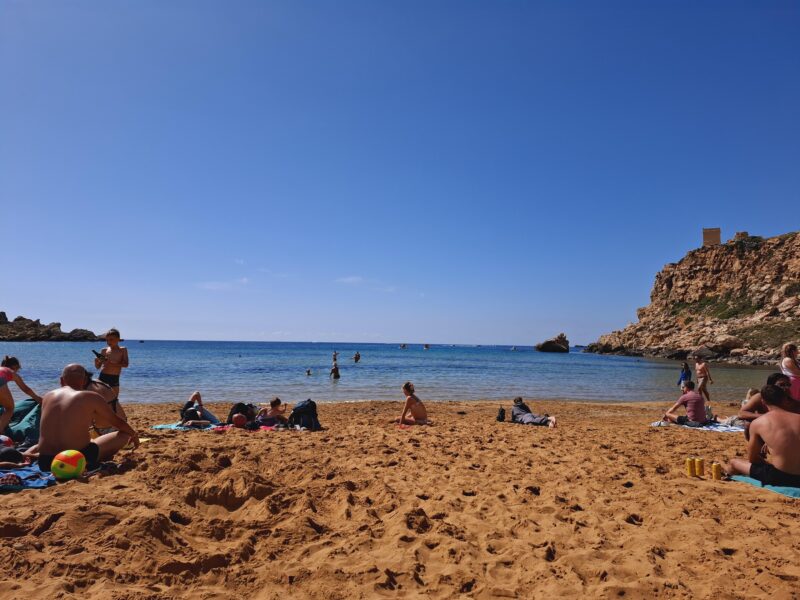
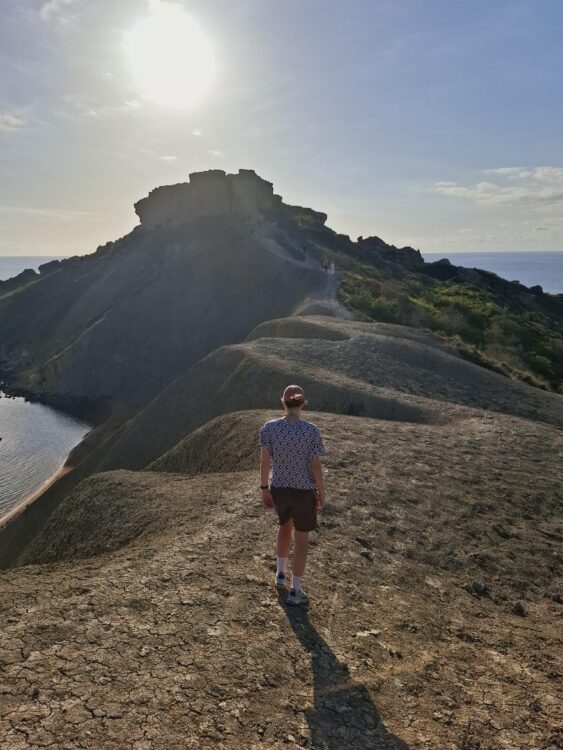
Before coming for the internship, I had visited Malta only once – when I came to see a friend who studies there. Malta is a small island in the middle of the Mediterranean, south of Sicily and close to Africa. In terms of architecture and culture – along with the Maltese language – it truly represents a blend of these two continents, with additional layers left behind by various colonizers throughout history. Beyond all that, Malta is a well-known tourist destination, and because of its small size and the large number of people moving through the island, it often feels overcrowded. The number of people and cars on the streets was a big change compared to the calmness of Nova Gorica.
However, what you won’t find in Malta’s tourist brochures – but what I experienced many times during my five-month stay – are fireworks and religious processions. Malta has the highest number of churches per square meter in the world, and almost every church organizes a procession for its patron saint: a festive street celebration with relics and saintly statues carried out of the church. These processions are well attended and usually end with a large amount of fireworks at night. Malta was also one of the most heavily bombed countries during World War II. That tragic recent history has been transformed – nowadays, leftover bomb materials and gunpowder are used to make fireworks, and they take it very seriously. During my stay, I even attended a fireworks choreography competition. These were things I couldn’t have imagined before arriving.
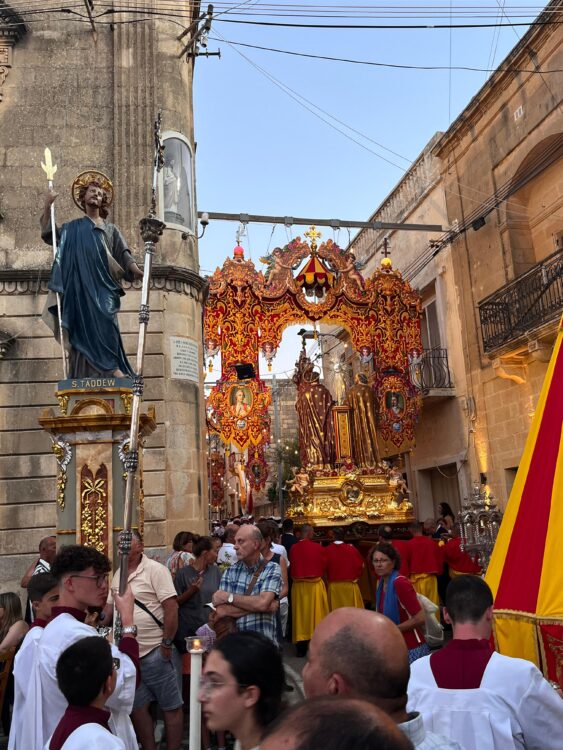
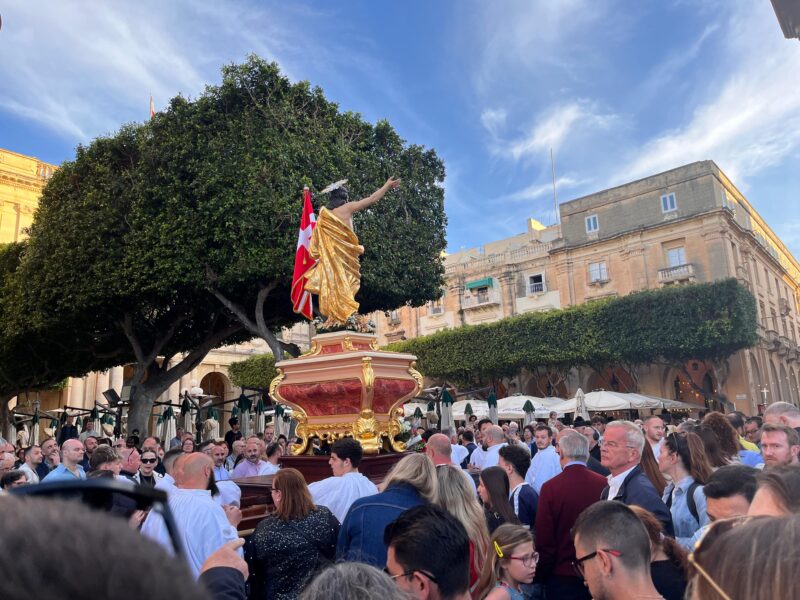
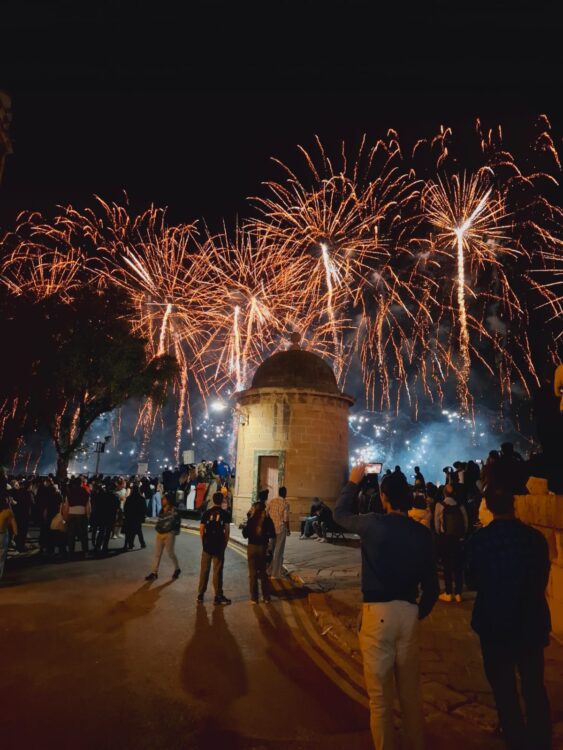
Also, I had assumed that – since English is one of the official languages – everyone would speak it fluently and use it with each other. However, Maltese is very much alive in everyday use, and English is spoken mostly when necessary, with foreigners and tourists. That actually made me happy – Maltese is a beautiful, very difficult language, completely different from anything I’ve ever heard.
Working at the Archives
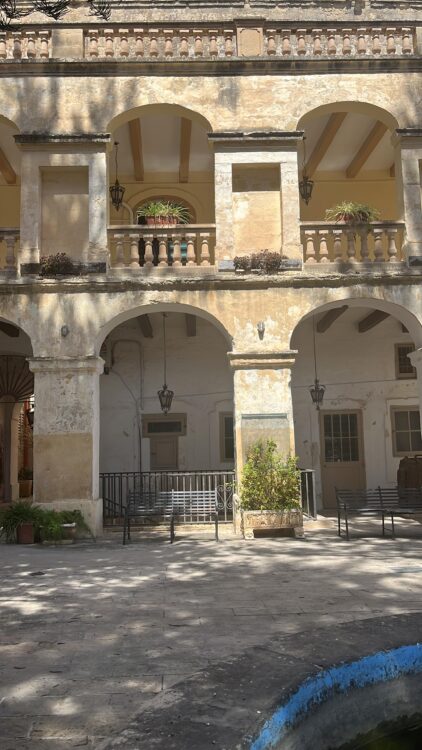
My internship took place at the National Archives. The National Archives of Malta is not housed in a single building – different departments are located in different cities: Valletta, Rabat, Mdina, and Gozo. This is partly due to the lack of space that would allow proper storage conditions for all materials in one place. I mostly worked in the central archives, located in Rabat. This department is actually housed in one of the oldest hospitals in Europe – Santo Spirito Hospital – which is mentioned in documents dating back to the 13th century. The old hospital has been slightly adapted for archival work, although the original architecture and layout of the rooms have remained mostly unchanged. Because of that, I would often see groups of tourists standing in front of my workplace during my lunch break, which reminded me to stop and appreciate the extraordinary setting I was working in.
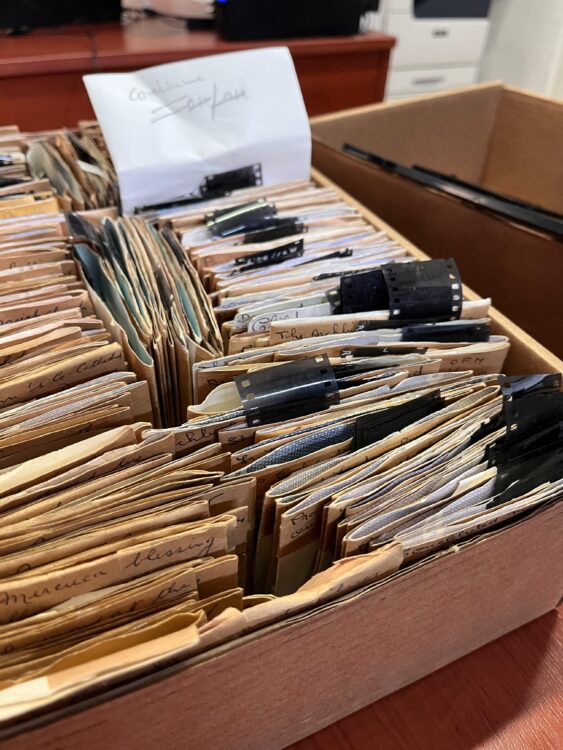
My tasks varied by day: on Mondays, I usually worked on cataloguing passports and visa/residency applications from the 1950s, as well as scanning and digitizing materials ordered by people in the reading room. On Tuesdays, I digitized films and photographs from the archives of Malta’s biggest daily newspaper, The Times of Malta. Wednesdays were for working with other interns, usually in the storage rooms, organizing materials, arranging boxes, cleaning documents of dust, and replacing metal staples with archival-safe materials. From Thursday onward, it was back to cataloguing and digitizing.
This way, I got to experience different departments and meet most of the staff. Almost everyone was from Malta, except for a few people in the conservation department. I learned a lot about the Maltese temperament – my colleagues were warm, sociable, very open to communication and the world around them, spoke loudly, and ate food quite similar to what we eat in the Balkans: meat, bread, sweets coffee. I never felt excluded, even when I didn’t understand the language being spoken.
I’m sure I’ll return to the archives next time I’m in Malta – hopefully to volunteer and help, because there’s always more material to process, and also to visit all the new friends I’ve made!
***
My internship in Malta gave me an amazing experience in getting to know a place and a culture in a way I couldn’t have imagined. I didn’t know much about Malta before arriving, but after five months of living there, I feel a close connection to it. I’m glad I now know so much about this small country on the edge of Europe – one of the smallest in the world, with a long history of fighting for its own authentic place.
I’m also glad that I got to see the other side of a popular tourist destination, both its strengths and flaws – from its warm and kind people, to crowded public transport, a lack of sidewalks, and intense heat.
On the practical side, the internship equipped me with valuable skills for working with unpublished documents. I learned how to approach documents both physically and technically: how to catalogue, scan, preserve, and make them accessible in different contexts. I’m certain that this work will benefit my studies and future career – especially in research related to samizdat materials I’ve worked on so far, or in working with the Letters collection currently being developed at the Research Centre for Humanities at my faculty.
In that sense, the entire experience was extremely positive, and I would recommend working in the Archives and spending time in Malta to my fellow humanities students!