Skip to content


My Erasmus+ Journey in India

In September 2023, I embarked on an exciting journey as an Erasmus+ intern in India. As a graduate student from the University of Nova Gorica, I was thrilled to work alongside Tanzania mission in India in a Tanzania Scholars in India Network. My role was to promote Tanzanian higher education, facilitate academic exchanges, and strengthen cross-cultural ties. This unique opportunity promised not only professional growth but also personal enrichment.

It was not my first visit in India, however, upon arrival in India, the vibrant culture and the warm hospitality of the people immediately struck me as if I have never been there. The bustling streets, colourful markets, and diverse culinary delights were overwhelming at first (was a bit spicy for me, yet enjoyable), but I quickly adapted and began to appreciate the rich cultural tapestry of this incredible country.

The Traineeship Experience

One of my primary responsibilities was to showcase Tanzania’s education system to Indian students and institutions. I organized and participated in various education fairs and conferences. These events were instrumental in highlighting the strengths of Tanzanian higher education, including its innovative programs and research opportunities. It was fulfilling to see the interest and curiosity of Indian students and educators about Tanzania.

A significant part of my role involved cultivating collaborative partnerships with Indian educational institutions. I explored various avenues for academic cooperation, from student exchange programs to joint research initiatives. This task required extensive research and a deep understanding of both Tanzanian and Indian educational systems. The goal was to foster cross-cultural learning and knowledge sharing, creating a bridge between the two nations.

To strengthen cross-cultural ties, I identified areas of mutual interest and coordinated the logistical aspects of academic exchanges. Providing support to students and scholars participating in these initiatives was crucial. This included offering comprehensive assistance to Tanzanian students studying in India, such as information on visa regulations, academic offerings, and cultural adaptation. Serving as an advisor to the Tanzanian ambassador, I contributed insights on vital education policy matters, including curriculum enhancement, teacher training, and the integration of education technology.

Building strong relationships with Indian educational institutions was essential. I nurtured networks that promoted educational collaboration and cultural understanding. This involved constant communication, regular meetings, and participation in various academic forums. The goal was to create a lasting impact and pave the way for future collaborations.

The journey was not without its challenges. Adapting to a new environment, understanding a different educational system, and navigating cross-cultural dynamics required patience and resilience. However, these challenges were also opportunities for growth. I developed new skills, including cross-cultural communication, project management, and policy analysis. The experience broadened my perspective and enhanced my ability to work in diverse, international settings.

As my internship in India ended in June 2024, I reflected on the incredible journey. The experiences and lessons learned were invaluable. I was proud of the contributions I made to Students Networks and the positive impact on Tanzanian Indian educational relations.

The Erasmus+ internship not only enriched my professional life but also my personal growth. It reinforced the importance of cultural exchange and international collaboration in education. I returned to Tanzania with a wealth of knowledge, new skills, and a deeper appreciation for the power of education in bridging cultures and fostering mutual understanding.

My Erasmus+ journey in India was a transformative experience. It provided me with the opportunity to make a meaningful contribution to the field of education while immersing myself in a new culture. The memories and connections made during this time will stay with me forever, and I look forward to leveraging this experience in my future endeavours.
Posted in Others.

Tagged with , , .


Erasmus+ mobility at METU (Budapest Metropolitan University), Budapest, Hungary

For the spring semester 2023-2024 I was taking part in the Erasmus+ mobility programme, studying Film and Media Studies and Graphic Design at the METU (Budapest Metropolitan University) in Budapest, Hungary.

First, I would like to note, that I’ve been to Budapest plenty of times before, so the country with its culture and people was something intriguing and interesting for me to experience a bit closer! It wasn’t my first exchange semester abroad, but I was still really curious about the level of education in another country, willing to obtain some new skills and experience in film making and making new connections in the European world of cinema. And here I’d like to state that Budapest and its film industry (especially with short student films) was a perfect place for me to push my horizons and get a lot of new knowledge about both filmmaking and a new culture. 

In this review I would like to share my experience in detail to help other students who are willing to go to this University to make their mobility period in Budapest as smooth and good as possible. In this text I will write about my path in chronological order of me preparing and living through my Erasmus+ semester, in order to make a brief guide for the people interested in METU University exchange programme.

  • Looking for accommodation and University locations
    The first step after receiving the confirmation for the exchange was to find a place to live for these 5 months of my mobility. I was lucky with having a lot of friends and people close to me here in Budapest, so for the first month I was living in my boyfriend’s flat, while visiting some rooms around Budapest and deciding on the one I’d spend the rest of my mobility at. Budapest is quite rich with accommodation options, so if the search for the apartment will be made in advance, it is very possible to find a nice flat/room/shared house for quite a cheap price (for a capital city). Moreover, METU suggests Erasmus+ students living in a dormitory, but it’s quite expensive (400EUR for a private room), so I chose the option of finding my own room in a shared flat. The other disadvantage of the METU dorm is that it’s located in the very outskirts of the city (20 mins walking from Örs vezér tere metro station) and it is only useful for the students who study in the mail building of METU – which is located at the Örs vezér tere. So before looking for the accommodation, you should know where exactly your classes will be held (METU has 3 main locations – Örs vezér tere metro station, Infopark and Rozsa Utca + multiple studios located in very different parts of the city – one in about 20 minutes walk from the city park, and the other one in another city in the Pest County – LLOYD Studio – about 1.5h bus ride from the city center). It’s very difficult to know where your classes will be held in advance, only when you see your schedule on Neptun*, so one way might be asking your Erasmus coordinator in METU to share the approximate locations of your classes in advance. I had to figure it out myself, so it was quite a challenge, but gladly I had an extra month, so I could actually see the locations of the school before making a final decisions on renting an apartment.
    Generally, in Budapest it is very easy to get by with any public transport, that works even during the night (special route night buses), or using a bike. I was practicing both, and I can gladly say, that Budapest is actually extremely bicycle friendly and you can get anywhere inside the city much quicker than with a bus. BUT, I won’t recommend using a bike if you live on the Buda side, as it’s quite hilly and it can be very challenging – while Pest side is almost completely flat and very bike friendly.
  • Registration process and organisation of studies
    For the whole organisational process I can only say that it was extremely challenging and difficult to figure out the system of the university, and I’m not quite sure that even now, finishing the studies and after 5 months studying at this University, I understand everything…
    For the registration, you have to have two accounts on the Hungarian study websites – Neptun and Coospace. Both of them are extremely bad designed and are completely not user friendly, break down every time there is some event that people have to register for and for a foreigner who never used a portal like this (by that I mean – extremely bad designed and old), it’s very challenging to get used to it. The whole communication and organisation parts with all the parties of your studies are held there, the same with the assignments, homework, exams, tests, messages and registrations. So I advice trying to figure it out as soon as you get the access to it (I also faced a lot of problems with the access, so for me the whole process of using those websites was hell). On Neptun you should perform all the registration for the subjects you want to choose and most of the times you have to see yourself all the schedule conflicts and manage the time of your classes. I had to change a lot of subjects as I couldn’t fit everything to the schedule panel and had some problems with Neptun. Another problem is that you might not get a place at a class you wanted to take as all the students come to the website on the day of the registration and apply for it, so sometimes all the spaces are getting taken in less than an hour after the opening of the registration. Moreover, you only have a couple of days (or maybe a week) to register for all the subjects, and if you don’t do it in time you won’t be able to go study at the University (at least they claim so). So with this University it’s very important to know and follow all the deadlines.
    IMPORTANT: for the registration day at the University, you have to register on the precise day of your arrival to Budapest (or MAX. 3 days after your arrival), because in the final agreement the day that they will put on your certificate of attendance will be the day of your arrival, and they can’t change it to your actual day of arrival. I faced this problem and lost some of my grant money, even though I asked managers at the METU University to put the actual day of my arrival on the certificate, but they have the stamps with the dates, so they are not able to change it. So when METU sends an obligatory registration email, it’s much better to register on the closest day to the arrival.
  • Film and Media department in METU
    Overall studying in METU was more a pleasant experience, but there is a lot of ups and downs, especially in the Film department. Most of the classes for the film and media are located in InfoPark D and I buildings, which are on the Buda side and normally very difficult to reach by public transport without walking for 20 minutes from the tram 4-6 stop. So this should also be taken into consideration, if you don’t leave close to the InfoPark or at least on the Buda side, it will always be at least 40 minutes (and in my case an hour) to get there.
    The subjects are constructed quite strange, with dividing one subject to 2 classes with different professors, and then at the end it takes 6 hours (3h one class and then 3h another one, in a different location and with a different professor) – that was pre and post production class, that was divided to scriptwriting and editing, but they weren’t connected between each other whatsoever. Then I signed up for a studio class – it appeared to be a 12 hours class (8am-8pm) in another city 1.5h away from Budapest that somehow also was connected with this pre and post production subject. After visiting the class for one time I clearly could see that this class is not going to be helpful for me whatsoever, plus it’s just impossible to go through a 12h long class with another 4h of travelling time, so it was decided that I’ll give up this class and change it to something better. The class changing policy at this University is also very strange, as you only get a week to actually make changes in your schedule, but, for example, during this ‘changing’ week I only had half of the classes I picked, so after all I wasn’t able to give up some of the classes that didn’t completely satisfy me.
    Overall, after giving up this studio class everything went quite smooth and it was easy for me to manage studies with the student life. Most of professors were nice and not strict whatsoever, the classmates were fine, all the classes were held in English, so it was more or less a nice experience, except the organisational part, as none of the professors actually understand the system of the University as well, so we were never sure what would be the final assignment or exam ahead of us.
  • Student films
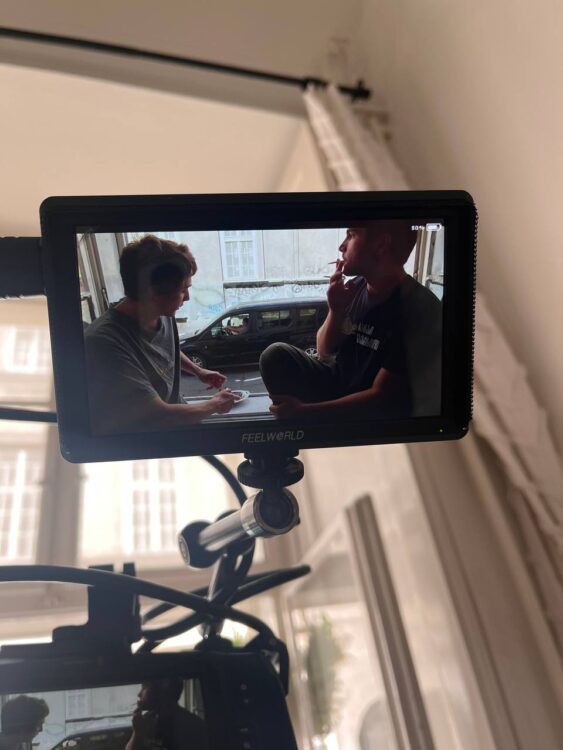
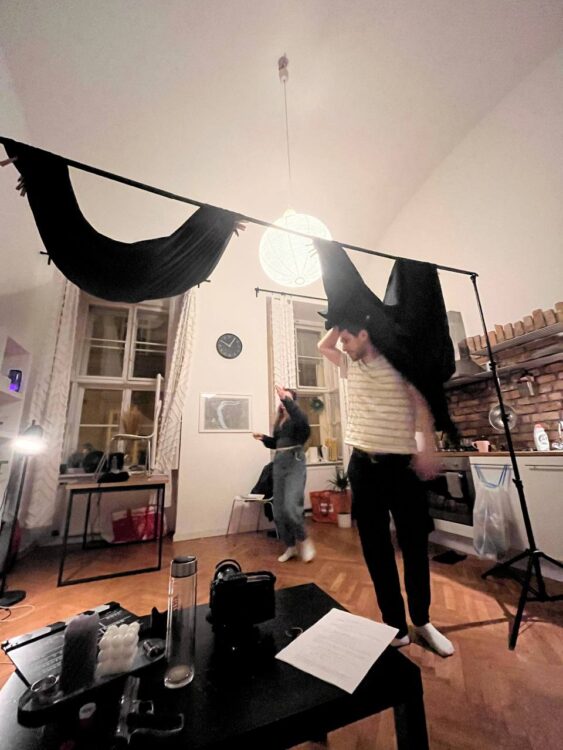
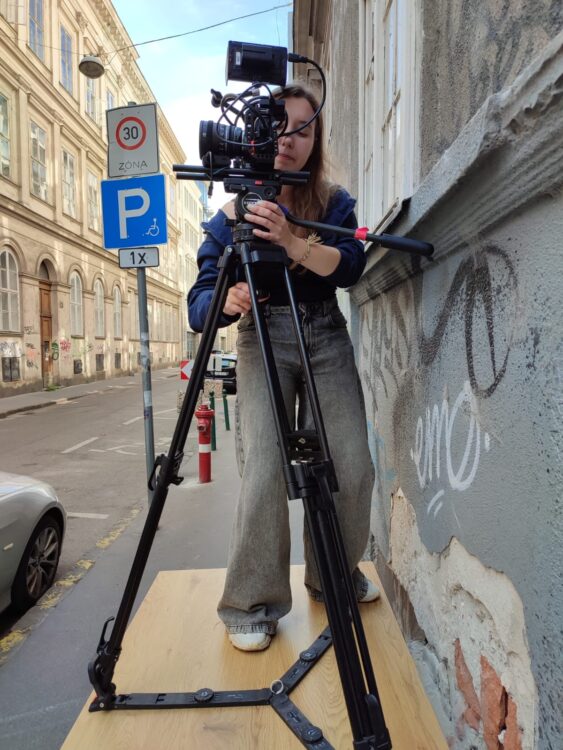
    As I mentioned before in this text, I was very lucky to have friends in Budapest, also because I could participate in a lot of student film shootings and improve my skills in various spheres of filmmaking. This semester we actually worked on 2 diploma shootings, 1 first year short film shooting, 1 music video and some documentaries together with international teams, so it was quite a busy period, but it was honestly amazing, as people I know here are very professional in what they are doing, so it was a great experience.
    METU has a rental for equipment and a studio, so it’s possible to take quite some useful things from them, but the rental still is missing a lot of essential equipment, so for more serious projects it will be necessary to also use rentals around the city.
  • Graphic Design department at METU
    With Graphic Design I got much more lucky and I can highly recommend this university for this field of studies. All the professors were organised, professional, caring and very helpful on the way, with amazing assignments and great and helpful feedback. It was a great pleasure to work with them during the semester and improving my ideas with their guidance. Most of the classes on Graphic Design are held in the METU building very close to the city center (7 minutes walk from Keleti train station, 20 minutes walking from Astoria metro station) at Rozsa Utca, that also improves the overall experience of University.
  • Out of University activities
    METU suggests to its students lots of out of uni activities, such as sport classes (wallclimbing, yoga, poll fitness, and so on), different student clubs (cinema club, photography club, travelling club, book club, etc), and some sightseeing tours across Hungary, so it’s worth looking it up. Normally they don’t mention it and you would have to check upon it on CooSpace. I really enjoyed free sport classes, but you have to sign up for them one week before and they have a very limited amount of participants, so to visit them regularly you would have to be very cautious about signing up for them in time.

To sum it up, I would like to say that my overall experience on this Erasmus+ exchange was quite pleasant. I really enjoyed the city and all the pros it gives you, with amazing architecture, transport system, weather and vibe. I am still really grateful for the opportunity that was given to me and I can for sure say that I gained plenty of new skills and assembled some connections that can be very profitable for me in the future, thank to the film shootings I attended here. Despite all the difficulties that could be met with a different system in another university/city, I still think I would recommend taking a chance of studying abroad and encourage people who are thinking of a semester in Budapest to come here and try it themselves!

Posted in Others.

Tagged with , , , , .


Erasmus+ exchange in Opava, Czech Republic

For the winter semester of the academic year 2023/24, I went on an Erasmus+ exchange at the Silesian University in Opava, Czech Republic. Before I went, I set two goals for myself – get to know the Czech Republic, language, people and to travel. Now, when I am back from the exchange, I can safely say – I achieved both goals.

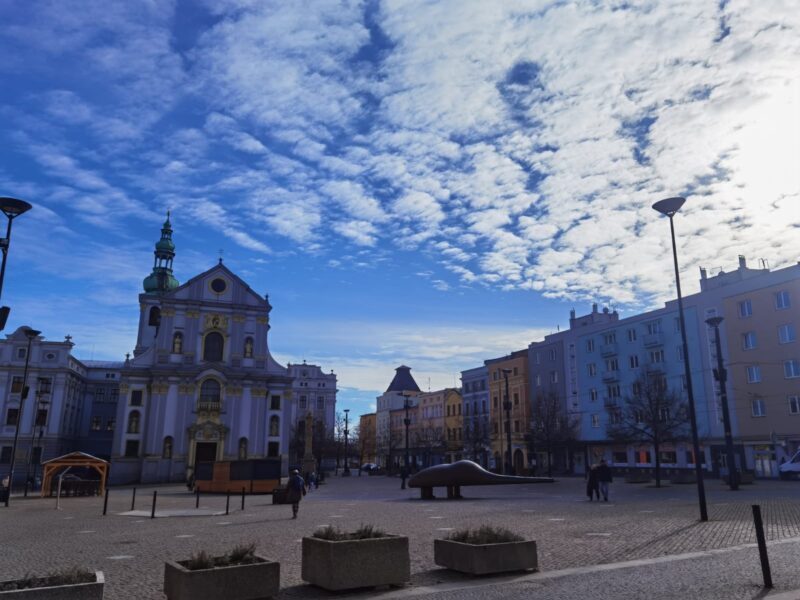
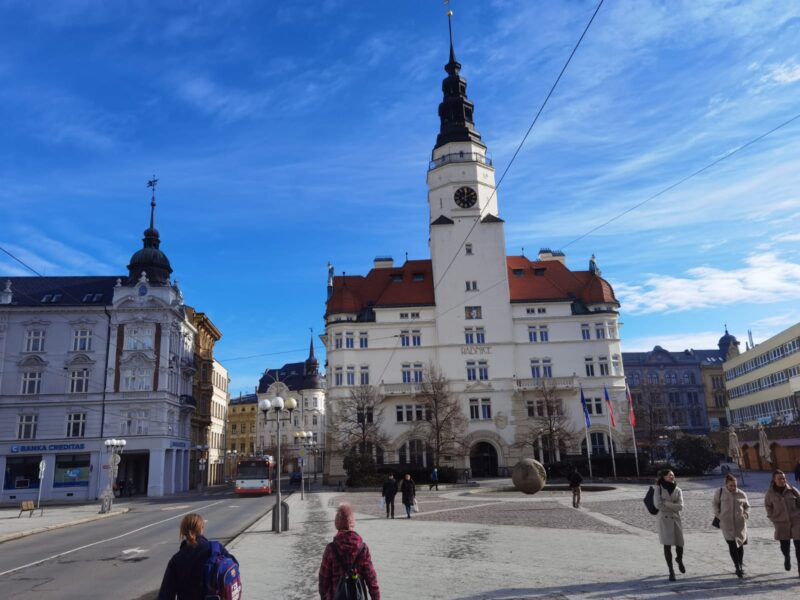
Firstly, about Opava. It is a small town, close to Ostrava, the third biggest in Czech Republic, and also close to Poland. It was calm and picturesque throughout the autumn period, with all of the leaves falling from the trees, and, if you are into architecture – there is a really weird combination of buildings from communist times, and buildings from 400 years ago. If you are into parties, I recommend Ostrava as the better choice, because in Opava the “big” parties were rare. The café and beer culture are present, so you won’t miss out on that.

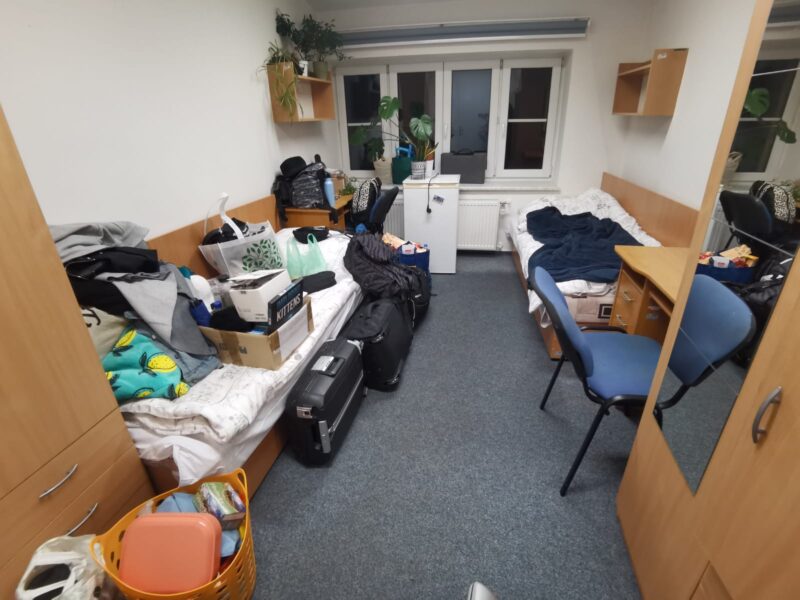
About the Silesian University – I am rather satisfied. The courses they offered were okay. The academic and administrative support from them was exceptional – they won’t leave you hanging. The Erasmus+ buddy helped me from the first minute I arrived in Opava – with the luggage, with the accommodation, with a new SIM card – everything to get me started in the new environment. The professors were nice and helpful. Just be careful if you decide to come to Opava – not all courses are in English, so choose wisely.

On the topic of English, maybe the biggest let-down I have with the exchange in Opava was the lack of international students. In this region, the hub for international students is in Ostrava, as it has bigger universities. In Opava, the lingua franca between the students, if I can classify it like that, is the Czech language. Most of the students here were from Czechia, Slovakia, Ukraine and to some extent Belarus and Russia – who study in Czech and speak it quite well. But, if you decide to give Opava a chance – don’t worry! The Czechs love when you try and speak Czech – they will find it funny – but they will help you learn it. And most of the students speak at least some English, so that’s a plus as well.

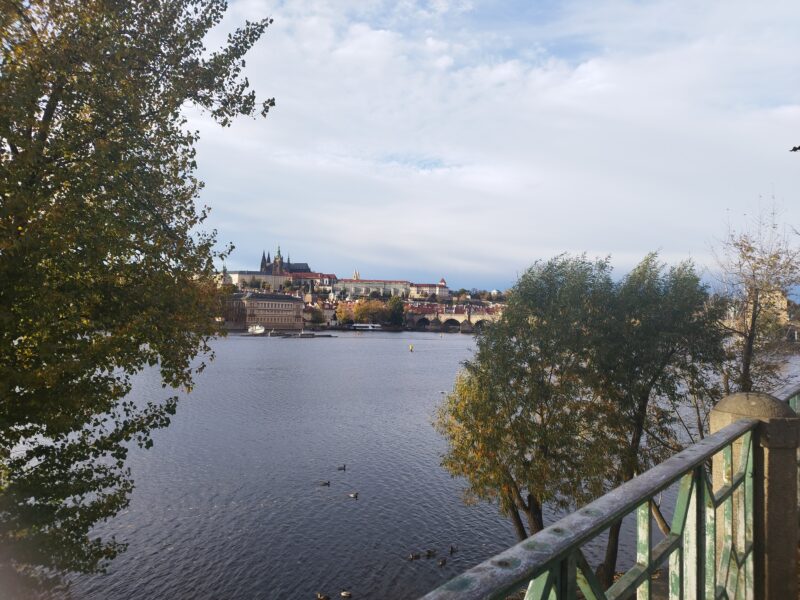
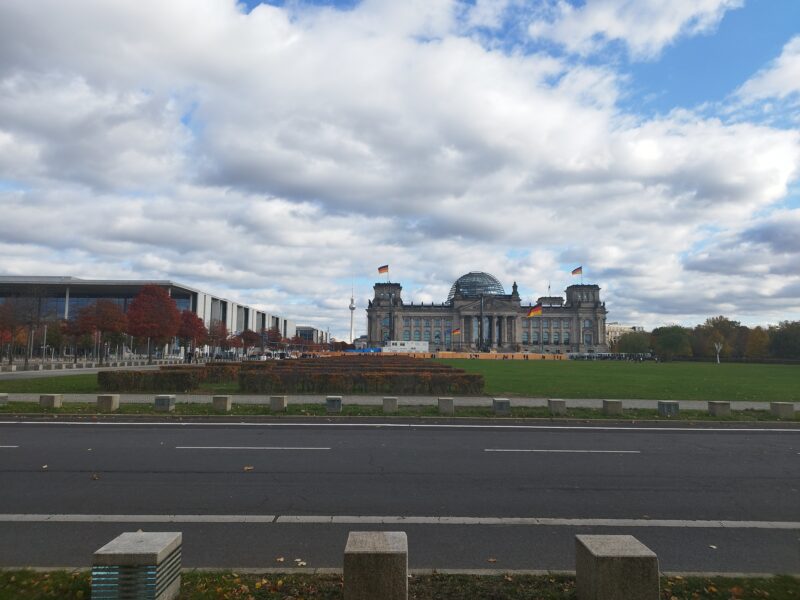
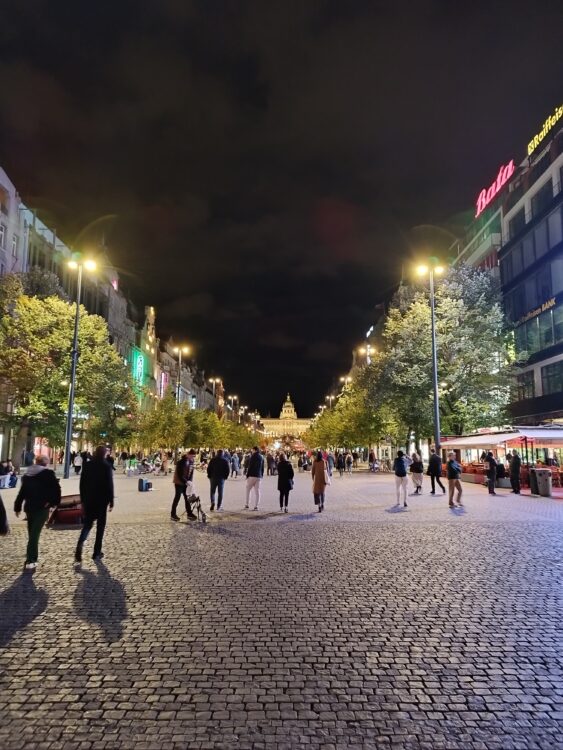
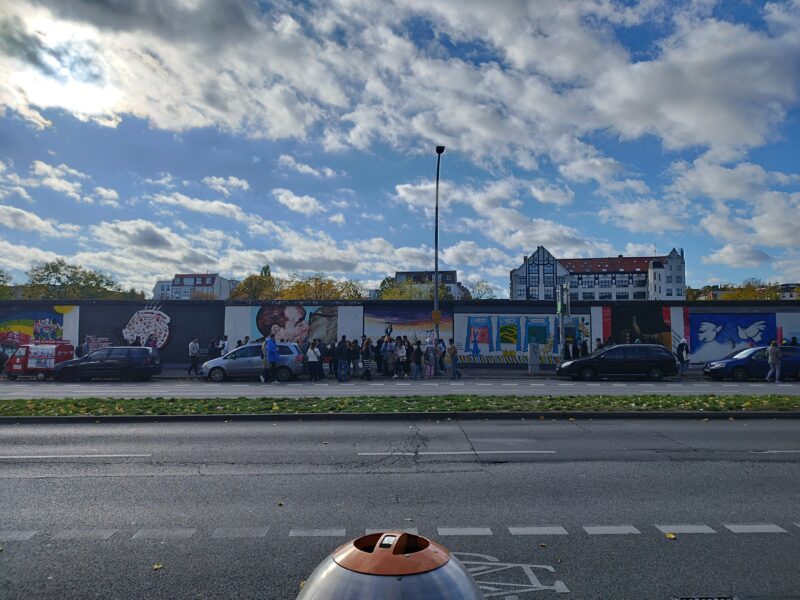
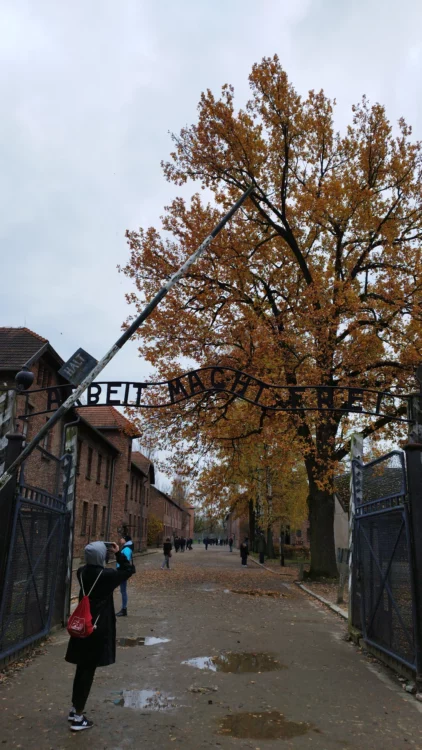
In regards to my second goal – the Czech Republic is in the center of Europe – and everything is in the vicinity. You have bus, train and plane connections from Ostrava, which is maybe half an hour away from Opava. For me, the best option most of the time was the train – but the buses as well were quite frequent to wherever in Europe. For cheap airplane tickets, I recommend Poland, specifically Krakow – which is 2 hours away from Opava. If you decide to stay and travel around the Czech Republic, you won’t make a mistake as well. Finding connections and tickets for destinations in Czechia is even easier. I’ll add some photos from my travels.

I strongly recommend the Erasmus+ exchange experience. Don’t overthink it, the staff at UNG and whichever receiving institution you decide to go to will help you with anything. Go, meet new people, new cultures, study a bit and travel! Europe may be a small continent, but it is very diverse. Whichever university, city or country you choose for your Erasmus+ exchange – you will learn something new and your worldview will change for the better.    

Posted in Others.


Erasmus experience in Opava

So…. It is always hard to start. Writing something or going somewhere new where you know nobody. I must say even though it was hard to leave friends and family, I was quite excited for the new experience. Going to Erasmus+ exchange in Opava, Czech Republic.

From the start, even before I came there, their coordinator and the buddy I was assigned were both super nice and tried to help with anything they could. This continued also when I came there and trough the whole semester. The buddy helped me get all my stuff to my room, showed me around the town, helped with internet and student cafeteria. Anything I needed he tried his best to make my stay there a bit easier.

I really liked the town and the feeling of it when you are there. But as it is a small town and a bit smaller university, not a lot of international students sign up to go there. I was the only one on my field of studies and two other international students that I met were also each on their own field. Leaving us surrounded by mostly Czech people. When you are the only international student, life can sometimes feel a bit lonely even though everybody was super nice at my university. A lot of my classes were also in Czech due to me being the only non Czech speaker and sometimes we would start in English but later switch back to Czech. But all professors would answer any questions I had, one even sent me English literature that might interest me.

A very nice thing about Opava is also that it is very well connected to Ostrava which is 3rd biggest city in Czech Republic. Ostrava has a lot happening, is a very nice city and is well connected to other countries. Also with Poland right there and Austria few hours away there is connections with different airports so traveling is quite easy.

I think the general experience was nice but could be better if more people decided to go there for an Erasmus exchange. With more people, more classes would be taught in English and there would be more students that could interact with each other.

Posted in Others.


Erasmus+ mobility at Universidade Lusófona, Lisbon, Portugal

For the autumn semester 2023-2024 I was taking part in the Erasmus+ mobility programme, studying Cinema Studies at the Lusófona University in Lisbon, Portugal

First, I would like to note, that it was my first time in Portugal, so the country with its culture and people was something completely new for me to experience! It wasn’t my first exchange semester abroad, but I was still really curious about the level of education in another country, willing to obtain some new skills and experience in film making and making new connections in the European world of cinema. And here I’d like to state that Lusofona University was a perfect place for me to push my horizons and get a lot of new knowledge about both filmmaking and a new culture. 

In this review I would like to share my experience in detail to help other students who are willing to go to this University to make their mobility period in Lisbon as smooth and good as possible. Later in this text I will write about my path in chronological order of me preparing and living through my Erasmus+ semester, in order to make a brief guide for the people interested in Lusofona University exchange programme.

  • Looking for accommodation
    The first step for me after receiving the confirmation from Lusofona was finding a place to stay for 5 months of my exchange. This period was one of the most stressful times of my mobility, as I heard a lot of information that it is almost impossible to find a place in Lisbon for an acceptable price that would fit all the requirements for a student.
    My goal was to find an overall cheaper room somewhere both next to the center of the city and the university (which is located next to Campo Grade metro station). I started looking for a place 2.5 months in advance on both Facebook marketplace and Idealista website (the one that has the most options for the apartments in Lisbon). That wasn’t successful as all the landlords wanted the tenant to move in as soon as possible, and not 2 months after making the agreement, and the competition for the apartments is quite high, moreover they won’t rent you a place if you don’t come for a visit in advance, so it’s always great to have a friend in Lisbon who could schedule a visit and go see the apartment before you arrive to Lisbon. 
    Because of those reasons, I decided to stop the search and continue looking for the places at least 1 month in advance, but at the end it also didn’t really work, and I could only move in into my room after I arrived to Lisbon and went for a visit (I was lucky to have a friend to stay over for a day, and also getting the room right after the first visit).
    Another alert: it is almost impossible to find a room without mold on the walls or windows as the humidity level in Lisbon is really crazy, so everyone should be aware of this, especially the people with allergies or asthma. Also, most of the places don’t have heating inside, so it would be smart to buy an electric heater for the winter period as it can get quite cold in the period from November till April.
  • Registration process
    When I arrived at Lisbon, I didn’t yet have my schedule or any information about the classes I was supposed to attend, so I recommend contacting the Erasmus+ coordinator in Lusofona in advance to get registered for all the courses in advance and not to spend a lot of time during the study period already with registering and changing the subjects. Moreover, the website of Lusofona doesn’t specify the language of the course, so there is a big possibility that the courses a student picks in advance will be only taught in Portuguese. That was the main reason I had to change almost all of my original subjects in the first month of studying here, as you won’t know the language of the course before you physically come to the class, so I had to change about 7 courses out of 5 I was supposed to pick, only one remained the same from the beginning.
  • Cinema Department at Universidade Lusófona
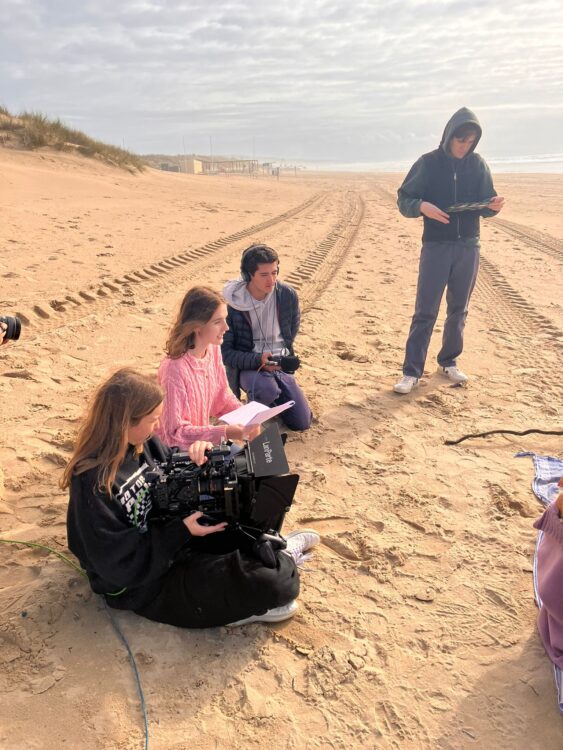
    Talking about the experience of my studies in Lusofona, I would say that the university is perfect for the people who already are experienced in filmmaking and want to realize their own projects, using the equipment and professional support the professors give here. For me the biggest advantage of the school was the amount of professional equipment and special rooms they have. I had to chance to work with all kinds of Arri cameras (Arri Alexa LF, Arri Mini, professional REDs and Sony cameras), building up and operating dollies, operating the focus pull kit and so on. Moreover, we had lots of classes in the professional sound mixing room (all the sound classes each week) and color grading room (there we had a possibility to rent it almost every day to finalize the project). The film department has a lot of classes or special screenings in the cinema that is located on the campus territory and is quite large, bigger than lots of cinemas that I’ve been to in Lisbon. There we also had a possibility to check our projects to see in advance how it will look like on the projectors in other cinemas and listen to the sound as well. So I absolutely recommend this school for people interested in the practical part of filmmaking, such as cinematography, editing and sound design, as here you will have most of the tools to experiment and get the new skills and knowledge from. As for scriptwriters and directors, I am not sure it will be the best pick, as still most of the creative classes are held in Portuguese, or double language, but most of the people taking those courses (at least in my semester) were Portuguese students, so it was almost impossible for people who don’t speak Portuguese to follow those classes and make group exercises, so we decided to change the classes to more practical ones. 
  • Communication with the professors and final grades
    Accordingly to my experience and the experience of most of my Erasmus+ colleagues, studying in Lusofona is not really easy and takes a lot of your free time. All the Erasmus students have the same amount of exercises and treatment from the professors, even though sometimes they are not experiences in the subject of matter as much as the other students on the programme, so it’s unreasonable to expect some special treatment. I had both an excellent and very bad experience with different professors during my mobility period, but overall I might say that it is very important to get to know in advance all the requirements for the final assignments, as the rules of writing, for example, depends a lot on the professor, and most of the time (especially if you take 2nd or 3rd year classes) they don’t specify it in front of the class, as all the Portuguese students already know about it. So it’s very important to clarify everything before getting a negative feedback or be sent to the exam. But at the same time I had a very nice color grading professor that I would like to mention here (Danilo Miranda Cares), that first of all started giving us all the classes in English as soon as he got to know that there are international students at the class, and second of all was helping and supporting all the Erasmus+ students for the period of the whole semester. He also helped me and my production crew to make a short film from the scratch and helped us throughout the way. I also really recommend to take the cinematography and color grading classes with this professor as thank to him I really obtained enough knowledge to operate DaVinci color grading mode and was able to grade a film all by myself, as well as gained a lot of knowledge of different cameras specifications and the ways of composing light for a cinematic image. 
    For the bad experience I wouldn’t like to mention the names of the professors I didn’t really enjoy the way of teaching, but according to my personal experience there was nothing really bad that could influence my final perception of the faculty, as I was prepared for more demanding or a bit rude professors, but a lot of other Erasmus+ students had bigger problems with some of the professors at the school.
    The grading system is also different, and there is a very little chance that a student will get more than 18 (out of 20) for any subject – for all of my classes the highest grade the whole group got was 18 and about 5% of the whole group got a grade of 16 or higher for all the courses I attended. So here I would also note that the professors in Lusofona (and as I heard Portugal in general) are not really generous with giving good grades to the students – only if you do some extraordinary work throughout the semester you will get 18 or higher. 
  • Out of University activities
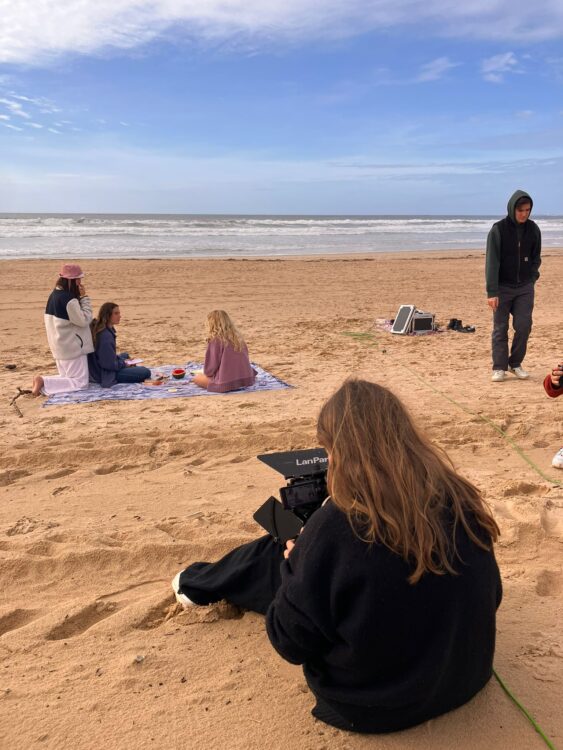
    It was a very pleasant surprise to get to know that Lusofona University hosts the course of surfing for all the levels, and gives quite a big discount for Erasmus+ people interested in it. I was attending the course for the beginners, that costs 50 euro for 5-6 classes during the second part of the 1st semester. The course itself was organized perfectly, for most of the classes we had a personal instructor that gave us a lot of recommendations at the end as well. This course I recommend to everyone coming to Lusofona and interested in surfing, that was for sure quite a big highlight of the whole mobility period.
    There are also a lot of other activities Erasmus+ people can participate in, that are getting introduced to all the incoming students at the beginning of the semester.
    Moreover, Lisbon is a very alive, modern city, where you can find anything you want to do, including sport activities, libraries, night life and so on. It has amazingly large amount of all the different cuisines presented in the city, so you can find anything that fits your interest. 
    Also it is very easy and cheap to travel throughout Portugal, you can always find tickets to Porto, Coimbra or Faro for less than 5 euros one way, if you buy it in advance, plus you can visit Madrid or any other Spanish cities with either plane or FlixBus and sometimes the whole trip costs you less than 20 euros.
  • Transportation around the city
    Lisbon has quite large transportation infrastructure and it is very easy to commute around the city. The first thing to do upon the arrival is to go to a bigger metro station (for example Cais do Sodre or Marques de Pombal) and apply for a transport card (before you would need to print or take an application form from the stuff of Metropolitan and print your profile picture). The lines of waiting for the applications are always crazy, I think I spent around 3 hours in the queue to apply, but it is definitely worth it, as with the card everyone gets a fixed priced monthly pass option, that without any discounts costs 40 euros for Lisbon Metropolitan area (that covers basically everything you will ever need to commute in Lisbon and around it). Moreover, people under 23 can apply for a discount, and from the year 2024 it is completely free for people under 23 to use this pass. The only thing needed for it is to prove that you are a student at a Lisbon University, and this document can be issued on the NetPa website that is used for all the records of students in Lusofona and Lisbon. 

To sum it up, I would like to say that overall my experience on this Erasmus+ exchange was amazing and I enjoyed every bit of it. I am really grateful for the opportunity that was given to me and I can for sure say that I gained plenty of new skills and assembled some connections that can be very profitable for me in the future and the mobility programme exceeded my expectations. Despite all the difficulties that could be met with a different system in another university/city, especially a bigger city like Lisbon and a bigger school like Lusófona, I for sure recommend taking a chance of studying abroad and encourage people who are thinking of a semester in Lisbon to come here and try it themselves!

Posted in Others.